
Dismantling Chute‑Burroughs dam in Stanstead‑Est
- Region
- Estrie
- Status
- Under study
- Type
- Production
- End date
- 2031
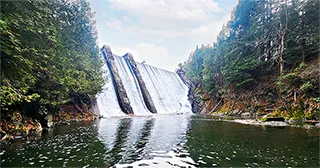
Hydro‑Québec plans to dismantle Chute‑Burroughs dam located in Stanstead‑Est, in Estrie, which is no longer used to produce electricity. Although a large-scale project, the dismantling will allow for a return to natural conditions for Rivière Niger and its ecological restoration.
On this page
Project description
Why does Hydro‑Québec need to dismantle the Chute‑Burroughs dam?
Located in Stanstead‑Est in Estrie, the Chute‑Burroughs facility was commissioned on June 15, 1930, by the Southern Canada Power Company. Since the nationalization of electricity in 1963, the site has been operated by Hydro‑Québec.
The 2‑MW generating station was in operation until 2010. It was permanently closed due to mechanical failure and lack of cost-effectiveness. Since that time, the dam has not been used to generate electricity and the site offers no viable energy potential. What’s more, ensuring the long-term sustainability of the dam would involve high investigation and work costs (Dam Safety Act).
For the past several years, Hydro‑Québec has been leading consultations with various partners, including the Direction générale des barrages (DGB), the Ministère de l’Environnement, de la Lutte contre les changements climatiques, de la Faune et des Parcs (MELCCFP), the Municipalité de Stanstead‑Est, the Wabanaki Nation and the neighbouring population in order to assess the best options for the future of the site. Based on the consultations, the dismantling of the dam and an ecological restoration project for Rivière Niger was selected as the most appropriate solution.
Restoring the river and its balance: water levels, flows, and ecosystems
The objective of dismantling the dam is to restore the ecological continuity of Rivière Niger and its tributaries. Consequently, the water level upstream of the current dam will return to its original level from before the dam’s construction in 1929.
Hydro‑Québec is committed to consulting with local communities and the Wabanaki Nation to develop a project that is respectful of social, environmental and territorial realities. Mitigation measures will be put in place to limit those impacts.
An environmental assessment will be carried out to identify all sensitive features in the environment and determine how the project may affect them.
Mitigation measures will be implemented to limit the impacts of the project’s activities on land users. Details of these measures will be communicated at a later date and presented before the work begins.
Hydro‑Québec intends to encourage the participation of the Wabanaki Nation at every stage of the project. We are working with the communities and organizations affected in order to support the development of the Indigenous workforce and maximize local economic benefits.

Work schedule
-
2025‑2028
Draft design: Planning the project, conducting the draft-design studies and preparing the environmental impact assessment, including the consultations.
-
2029‑2030
Obtaining government approvals, carrying out detailed engineering and planning the work.
-
2030‑2031
Issuing calls for tenders and carrying out the work, including site restoration and environmental follow-up in compliance with the government approvals that were granted.
FAQ’s
Go to our FAQ for the answers to the most frequently asked questions on the project and our environmental approach.
Even though it is aging, Chute‑Burroughs dam is safe thanks to the thorough follow-up it has undergone over the years. However, the results of the inspections and specialized assessments performed indicate that major work would be required to maintain the facility’s long-term sustainability.
All required authorizations will be obtained from relevant federal and provincial authorities including, but not limited to, the following notifications and approvals.
- At the provincial level: from the MELCCFP under the Environment Quality Act, the Act respecting the conservation and development of wildlife and the Dam Safety Act.
- At the federal level: from the DFO under the Fisheries Act and from TC under the Canadian Navigable Waters Act.
Hydro‑Québec will use a variety of tools to ensure ongoing and accessible communication with the public regarding the dam dismlantling work, including the following:
- Regular updates on jobsite activities posted on the project website
- A newsletter featuring information about the progress made on the work
Contact us
We’re committed to keeping the lines of communication open. Please send us your questions and comments about the project.
Info-project line: 1 866 388‑1978
Mélanie Gagné
Advisor – Relations with First Nations and Inuit
gagne.melanie2@hydroquebec.com

Newsletter Dismantling Chute‑Burroughs dam in Stanstead‑Est
Stay up to date on the project stages and progress to date.