
Bridge repairs at Rapide‑2 and Rapide‑7 generating stations
- Region
- Abitibi‑Témiscamingue
- Status
- In progress
- Type
- Generation
- End date
- 2027
This work is part of long-term undertaking to maintain access and modes of transport around the Rapide‑2 and Rapide‑7 facilities.
Overview Refurbishment objectives
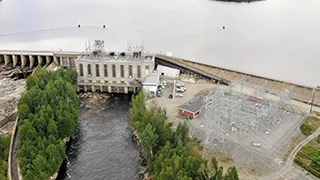
Hydro‑Québec is repairing the bridges at Rapide‑2 and Rapide‑7 generating stations on the Rivière des Outaouais (Ottawa River). The work is necessary to ensure user safety and extend the lifespan of these infrastructures.
Built in 1941 (Rapide‑7) and 1954 (Rapide‑2), the bridges have now reached the end of their service life. Once repaired, they are expected to remain in service for another 75 years.
Bridge closures
Users of the Rapide‑2 and Rapide‑7 bridges must find alternate routes, since the bridges will be closed to traffic while the work is ongoing. Hydro‑Québec reserves the right to modify schedules and the project timeline at any time.
- Rapide‑7 bridge Closed from April 14 to May 30, 2026
- Rapide‑2 bridge Closed from May 2023 to December 2027
- Rapide‑2 bridge schedule calendrier-2026.pdf [PDF 200 Kokilo-octet in French only]
Work on the concrete structures at the Rapide‑2 and Rapide‑7 facilities


This video presents the work carried out by Hydro‑Québec at the Rapid‑-2 and Rapide‑7 facilities to ensure public safety and long-term infrastructure viability. The project involves rebuilding the bridges and rehabilitating the concrete structures—work that entails temporarily closing the bridges and rerouting local travel.
Video duration: 1 minute 20 seconds
Coming soon
Mitigation measures
Users of the Rapide-2 and Rapide‑7 bridges must find alternate routes, since the bridges will be closed to traffic while the work is ongoing.
Rapide‑7
At the Rapide‑7 facility, traffic is being diverted to a logging road a few kilometres north of the site. To reach the west bank of the Outaouais, users must take the detour heading northeast to the logging bridge. The detour will not add to the time required to cross the river.
Relocation of a section of a regional snowmobile trail
As part of efforts to minimize the impact of the Rapide‑7 bridge closure, Hydro‑Québec has signed an agreement with the Club de motoneige de Val-d’Or. Under the agreement, a section of regional snowmobile trail 309 that formerly crossed the Rapide‑7 bridge has been relocated to the logging bridge a few kilometres north.
See the interactive snowmobile trail map on the Fédération des clubs de motoneigistes
du Québec website.
Rapide‑2
As part of efforts to minimize the impact of the Rapide 2 bridge closure, Hydro Québec has installed a pedestrian and ATV bridge, anchored to the concrete wall of the dam. This bridge allows the holders of leases for temporary (seasonal) shelters and other land users to cross the river when construction is paused.
Bridge schedule
The bridge is open from 7:00 PM to 6:30 AM, except for certain periods.
-
ATV and two-seater models restrictions:
- Maximum width: 1.7 m
- Maximum weight: 1,000 kg, including occupants and equipment
- Maximum speed: 5 km/h
- Clearance height: 2 m
There is no limit to the number of ATV that can use the bridge at the same time; however, stopping is prohibited.
Project phases
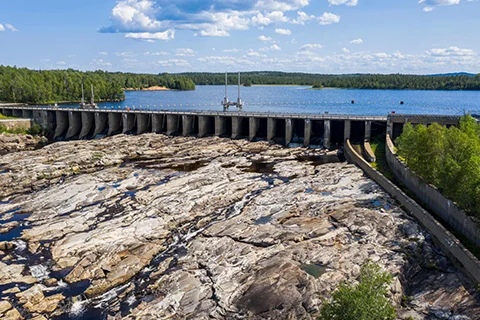
Demolition and reconstruction of the bridge decks will be carried out in stages. The schedule must take into account the need for the spillway to remain operational at all times. Hydro Québec must be able to open certain gates should the flow of the Outaouais become too high. Because these gates are operated by a trolley-hoist that travels along guide rails on the spillway deck, the work is planned in phases to allow a section of the spillway to remain accessible at all times.
What is a spillway?
A spillway helps manage the flow of a waterway during flood seasons. Flooding is a temporary increase in water levels—a natural phenomenon often observed during the spring snowmelt, as well as during periods of heavy and sustained rainfall.
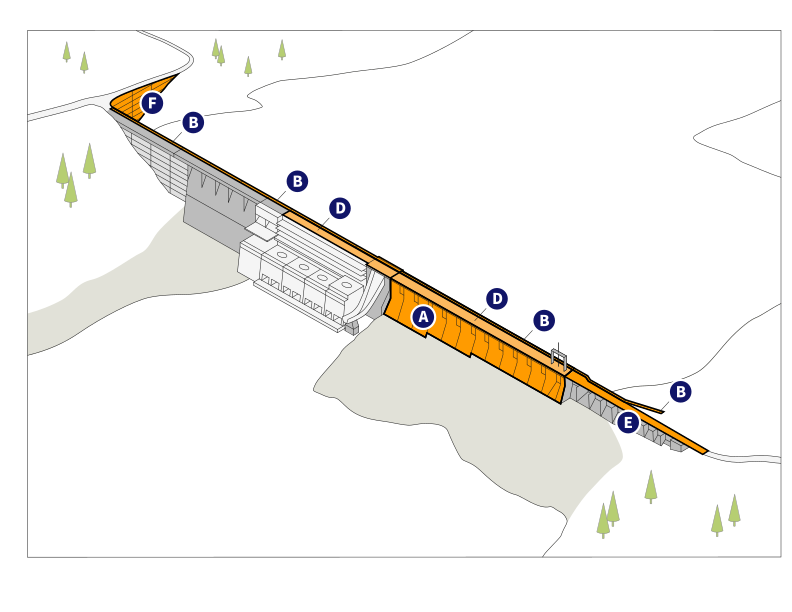
Work at Rapide‑7
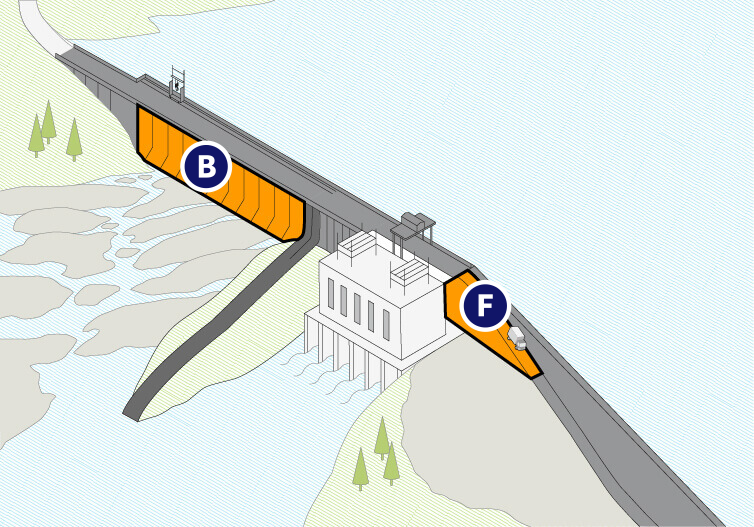
2021 : Jobsite preparations get under way as the contractor starts work. Work completed.
Zone B : Spillway. Repairs to the concrete structures of a first section.
Zone F : Wooden access ramp. The ramp is to be demolished. Reconstruction has been rescheduled for 2022.

2022 : Work completed
Zone B : Spillway. Continuation of repairs to concrete structures and the bridge deck.
Zone F : Access ramp. Reconstruction.
Zone C : Log chute closure.

2023-2026
Zone A : Deck reconstruction (east bank gravity dam).
Zone B : Repairs to the concrete and deck rehabilitation (spillway).
Zone D : Deck rehabilitation (intermediate gravity dam).
Zone E : Replacement of the intake covers and repairs to the concrete.
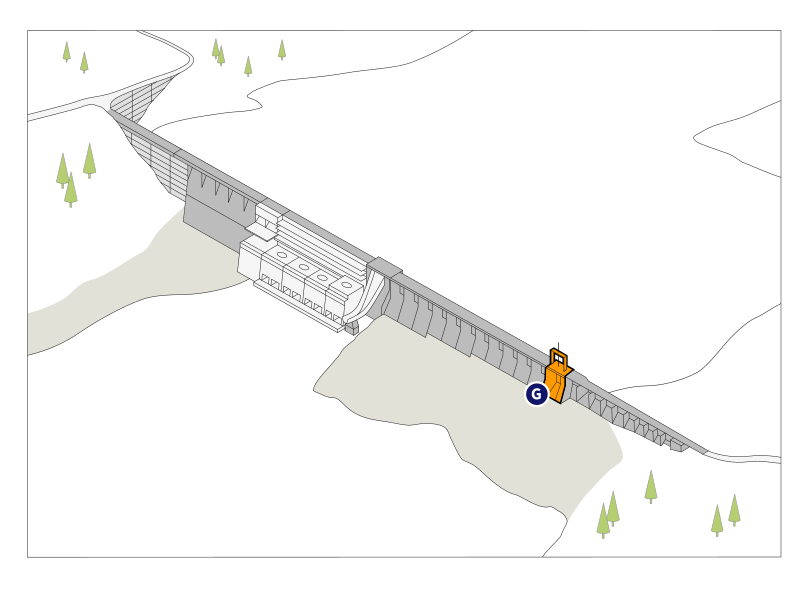
Zone G : Repairs to the concrete (west bank).
Zone H : Asphalting at each end of the bridge (2026).
Work at Rapide‑2
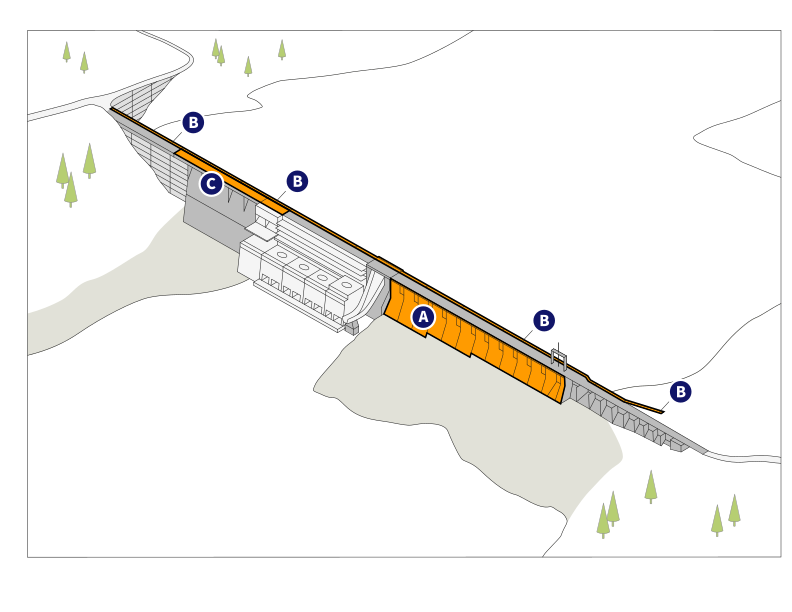
2023 : Jobsite preparations get under way as the contractor starts work. Work completed.
Zone A : Drilling and installation of anchors in the chutes and spillway piers.
Zone B : Installation of the pedestrian and ATV bridge upstream of the facility.
Zone B : Demolition and reconstruction of the deck of the north bank gravity dam.
2024–2026 :
Zone A : Drilling and installation of anchors in the spillway and piers (completed in 2024)..
Zone B : Dismantling of the upstream bridge.
Zone D : Demolition and reconstruction of the bridge deck (water intake and spillway).
Zone E : Reconstruction of the south bank gravity dam deck (ongoing in 2026).
Zone F : Construction of a retaining wall for the road embankment, north bank (completed in 2025).
2027
Replacement of the remote-control gate, its hoisting structure and the control building.
Project schedule
Explore the key project stages to find out more about how our projects unfold.
-
May 2021 to December 2025
Bridge demolition and reconstruction
Repairs to the spillway’s concrete structures
Replacement of the wooden access ramp with a steel structure
-
April to May 2026
Remaining work on the spillway
-
January 2027
Bridge reopened to unrestricted traffic
History of the Rapide‑7 facility
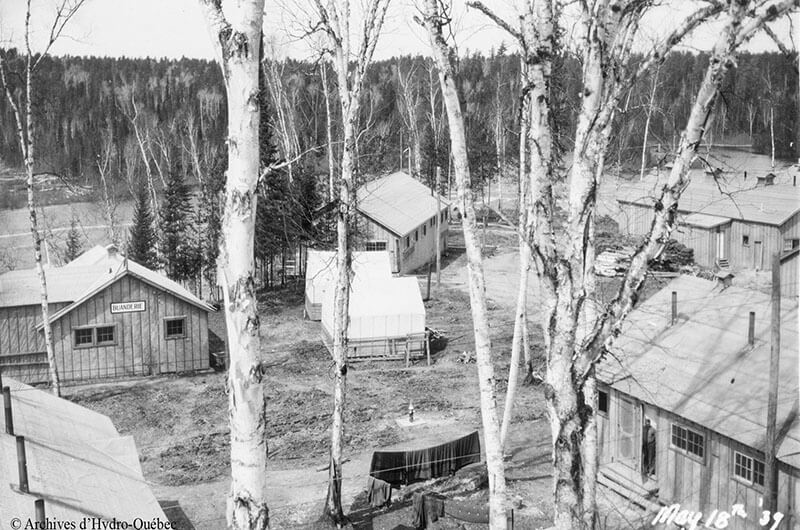
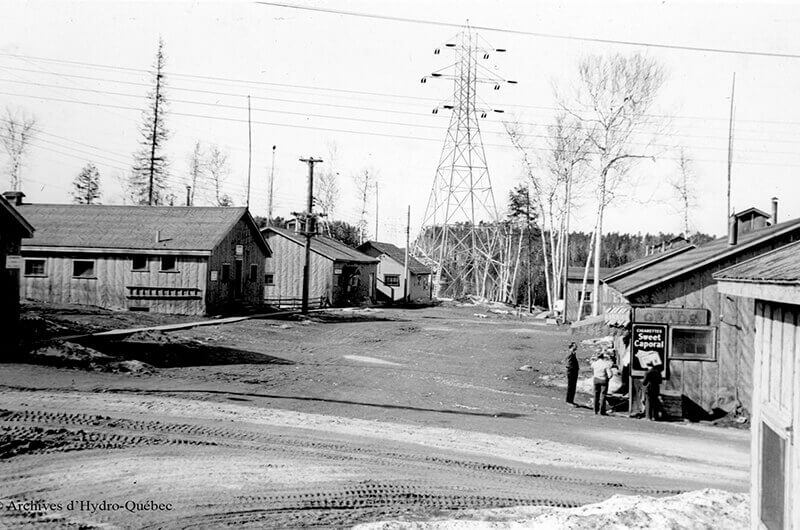
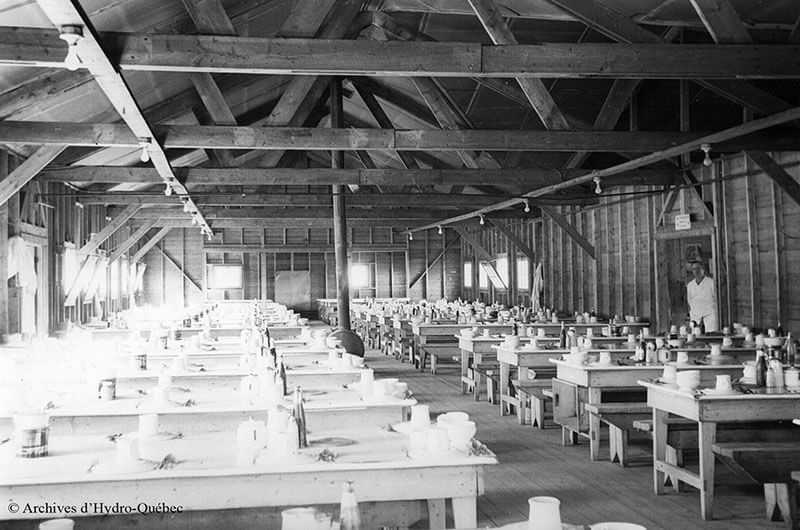
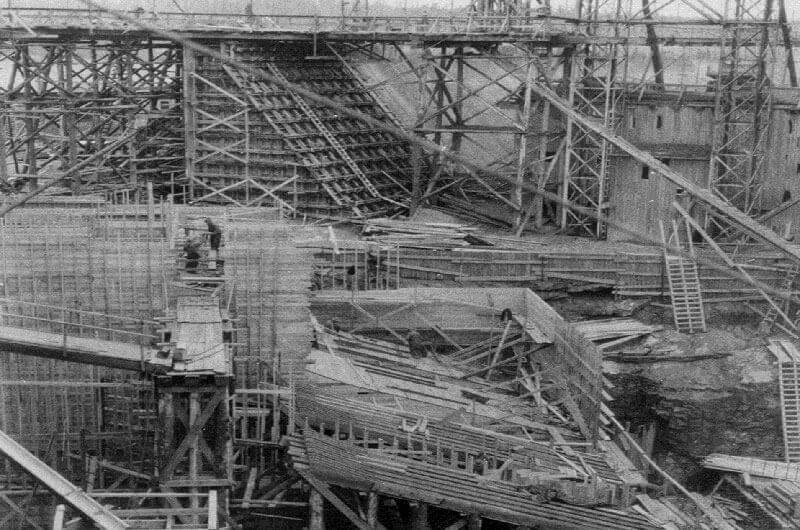
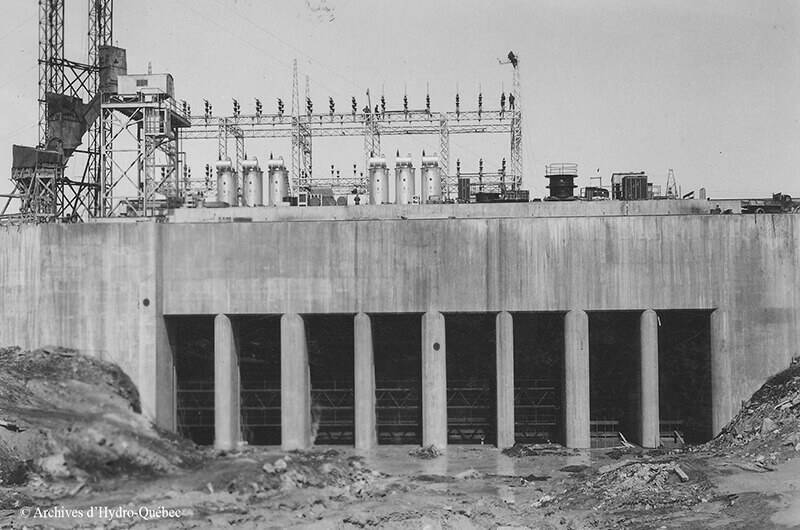
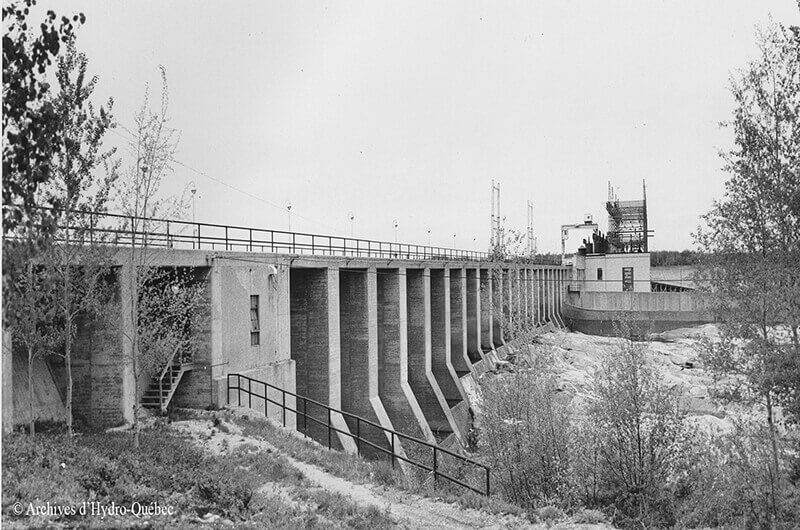
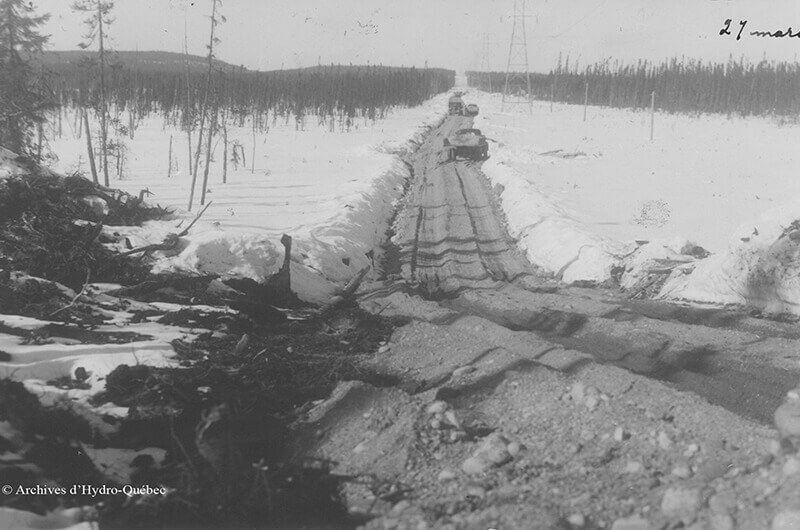
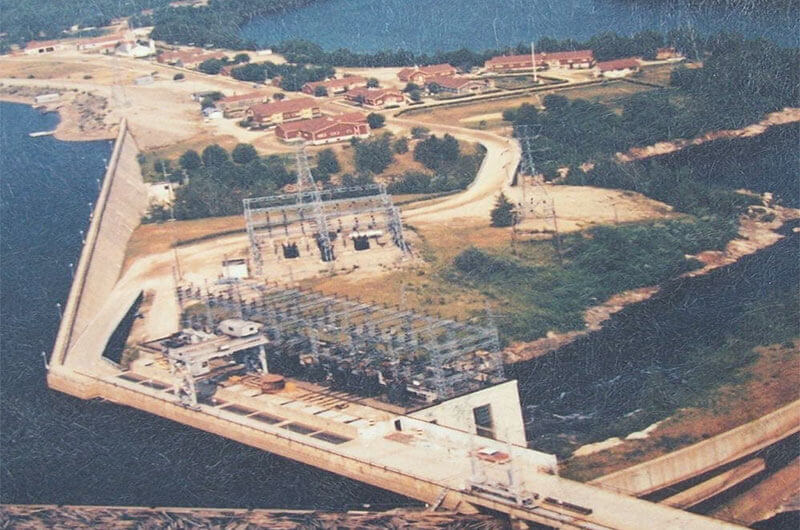
Photos from the Hydro Québec archives dating from the construction of the Rapide‑7 facility. Rapide‑7 generating station is the second station built in Abitibi-Témiscamingue, after Rapides des Quinze generating station in 1923.
In 1939, when construction to build Rapide‑7 began, a “company village” was created near the jobsite. With the advent of semi automation in 1967–1968, it was no longer necessary to lodge workers nearby. This marked the beginning of the end for the village.
Highlights
- Rapide‑7 generating station was commissioned in 1941 and Rapide‑2, in 1954.
- The Rapide‑7 road link is 381 m long, while the Rapide‑2 road link is 310 m long.
- The head is 20.7 m (68 ft) at Rapide‑7 and 20.4 m (67 ft) at Rapide‑2.
- Both stations have four generating units.
- Both have an installed capacity of 61 MW, enough to power 22,000 homes.
- Each drop of water that goes through a turbine at Rapide‑7 takes six hours to reach Rapide‑2, where it will go through another turbine.
Frequently asked questions
Go to our FAQ for the answers to the most frequently asked questions on the project and our environmental approach.
Service interruptions are not expected to affect residents of Cadillac and the neighbouring communities. Short-term interruptions are to be expected for customers who live near the generating station, including outfitters. Hydro‑Québec will be sure to notify all customers concerned before each interruption.
No. The Rapide‑2 bridge will be closed to all traffic for the duration of the work.
To minimize the impact of the bridge closure on users, Hydro‑Québec has installed a pedestrian and ATV bridge. This bridge can only be accessed when construction is paused.
Manufacturing and installing the bridge took from May to September 2023. During this period, it was not possible to cross the river at Rapide‑2.
To allow vehicles towing boats to cross the bridge, one lane will be open for four consecutive days, twice a year (early May and late October).
Work will continue during hunting season. The work takes place within the facility perimeter.
The rehabilitation of the bridges at the Rapide‑2 and Rapide‑7 facilities relies on specialized contractors and generates significant economic benefits for the region.
In 2021, Hydro‑Québec awarded the contract for the work on Rapide‑7 to Pomerleau Inc. It also hosted a subcontracting information session to encourage the participation of local businesses. More than 40 companies took part, and close to a dozen were awarded contracts. The estimated worth of the work at Rapide‑7 is roughly $80 million.
Work at Rapide‑2 generating station, launched following a 2022 tender process, is expected to represent a similar level of investment.
What’s more, local companies have been contracted to build jobsite offices, and the project has generated further economic benefits with the hiring of 30 to 40 workers and through local goods and services purchases.
No. Under current legislation, the work to repair the concrete structures at Rapide‑7 and Rapide‑2 does not require an environmental assessment to proceed.
These assessments generally apply to projects to build new electricity generation or transmission facilities.
Although there is no legal requirement to do so, Hydro‑Québec will maintain close contact with the groups and individuals concerned. We can be contacted through the Info-Project line or by email for the duration of the work.
Yes. The communications plan initiated in fall 2020 is ongoing. Hydro‑Québec has contacted local organizations and some 300 vacation or rough shelter lessees near the Rapide‑2 and Rapide‑7 facilities to provide information on the work and the bridge closures.
Communications with land users will continue for as long as work is ongoing. For any questions, Hydro‑Québec can be reached through the Info-Project line, by email or through the project newsletter, to which you can subscribe using the link below.
No. The work will have no effect whatsoever on the level of the Rivière des Outaouais.
Contact us
We’re very keen on keeping the lines of communication open. Please send us your questions and comments about the project.
Info‑projetc line: 1 866 388‑1978

PROJECT NEWS Bridge repairs at Rapide‑7 and Rapide‑2 generating stations
Stay up to date on the project stages and progress to date.