
Environmental assessment process
We take environmental considerations into account from a project’s earliest planning stage to better understand the host environment, select the most suitable locations for our facilities and minimize impacts.

On this page:
Why an environmental assessment is essential
Environmental assessment is a key sustainable development tool. It aims to anticipate a project’s effects on the natural and human environments so the negative impacts can be avoided, reduced or, when necessary, offset.
Integrated into the main stages of a project development, this approach supports informed, responsible and transparent decision-making. It better aligns the project’s objectives with environmental protection and the quality of life of the host communities. All our projects are carried out in compliance with applicable laws and regulatory requirements.
The environmental assessment process is designed to:
- Understand the natural and human environments
- Anticipate possible impacts
- Find solutions to reduce those impacts
- Maximize positive spinoffs
What is involved in an environmental assessment?
An environmental assessment is a long process that can last several months or even years. It includes several activities, such as:
- Identifying the area where the project will be carried out
- Analyzing technical, environmental and social constraints
- Public consultation
- Assessing and comparing any options
- Choosing and optimizing the selected variant
- Carrying out inventories and surveys
- Assessing the potential impacts
- Establishing mitigation measures
- Drafting the impact assessment or the environmental assessment
Selecting the optimal location and minimizing the impacts
When feasible, we select locations that minimize the impact on the natural and human environments. We focus on areas where the infrastructure fits seamlessly into the landscape and aligns with how the territory is used. From the earliest design stage, we aim to avoid sensitive and highly significant areas whenever possible rather than relying on mitigation measures alone.
However, it isn’t always possible to eliminate a project’s negative effects. In these cases, we implement rigorous measures to minimize, mitigate or reduce the impacts that cannot be avoided.
Examples of mitigation measures
- Carrying out work in winter to protect wetlands
- Landscaping around substations (to reduce the visual impacts)
- Scheduling clearing outside bird nesting periods
- Using reduced-footprint towers in agricultural areas
Seeing and understanding the territory from a different perspective
We use geomatics and 3D modelling to analyze the environment. These tools enable us to visualize how the proposed infrastructure will blend into the landscape and make informed decisions.
Understanding the environment to better plan our projects

Innovative tools allow us to analyze the territory, anticipate the visual impacts of the infrastructure and foster its seamless integration into the landscape (video in French only).
Video duration: 2 minutes
Visualizing the impacts to support better decision making (video in French only)
See how visual simulations using geomatics and 3D modelling provide a clearer picture of how the proposed infrastructure will fit into the landscape and support decisions to move a project forward (video in French only).
Video duration 6 minutes 20 seconds
Our best practices for responsible construction sites
To learn more about our environmental best practices and the measures we implement to reduce construction impacts and protect the natural and human environment, consult:
- The guides to good environmental practices for the construction and refurbishment of hydropower facilities [in French only] [PDF 15,7 MBMegabytes]
- The guides to good environmental practices for the construction and refurbishment of hydropower facilities [in French only] [PDF 12,4 MBMegabytes]
- The construction of transmission lines and vegetation control. [in French only] [PDF 31,9 MBMegabytes]
Collective expertise
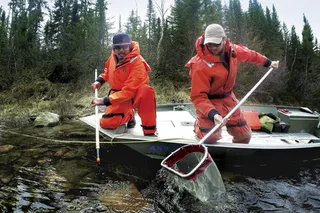
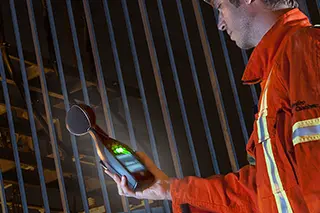
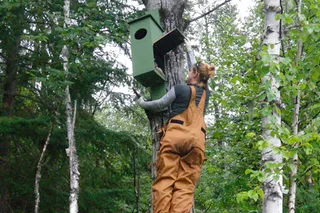
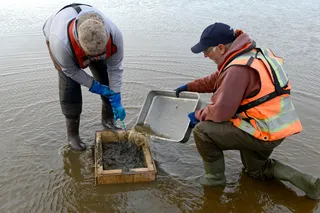
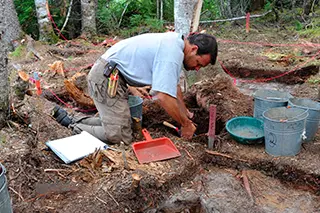
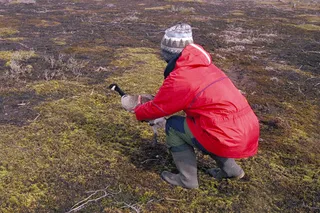
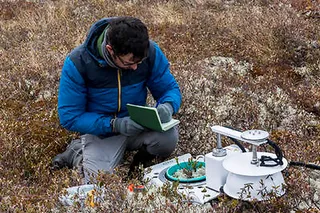
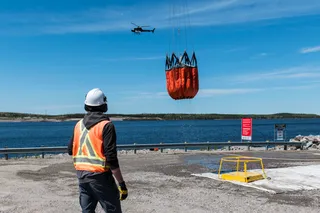
Dozens of experts participate in the environmental assessments and impact assessments, representing the fields of biology, geography, anthropology, archaeology, forest engineering, acoustics, etc. We also work with external firms and local communities. It’s a team effort requiring rigour and transparency.
Analysis and official decision by government
Once the environmental assessment is complete, all required studies and reports are filed with the Ministère de l’Environnement, de la Lutte contre les changements climatiques, de la Faune et des Parcs (MELCCFP), which reviews them for compliance.
If needed, the Bureau d’audiences publiques sur l’environnement (BAPE) conducts an independent public consultation to gather concerns and inform the government’s decision-making. Based on the analyses and recommendations, the government renders a decision: it may authorize the project with or without conditions, modify it or refuse it.
Follow‑up once new structures are in operation
Once the project is completed , we monitor the environmental impacts of the new facilities. This follow-up is designed to make sure that the mitigation measures are effective and adapted to the context. If necessary, we adjust them to limit the effects of the new facilities on the environment and communities.