
230/25‑kV Bonsecours Substation and 230‑kV Supply Line
Selected solution
Environmental assessment
Hydro‑Québec is currently carrying out an environmental assessment that consists mainly of detailed environmental inventories. Appropriate mitigation measures will then be developed. Once the assessment is completed, Hydro‑Québec will seek the necessary government approvals for line and substation construction.
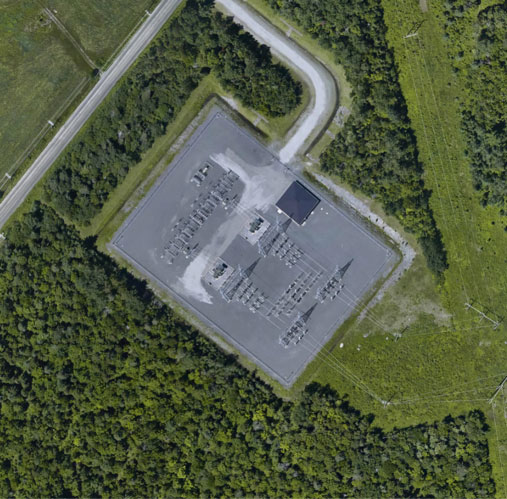
Substation site
The substation will be located off Chemin Malbœuf in Bonsecours. The site was chosen based on these criteria:
- Proximity to Lawrenceville and Valcourt substations, which currently supply power to customers in these sectors
- Distance from residences
- Possibility of preserving a strip of woodland to serve as a screen to mitigate any visual impacts
- No streams, rivers, wetlands or special-status species have been found on the site
Line route
In 2018 and 2019, Hydro‑Québec carried out consultations with the community concerned as well as inventories in the study area. These exercises made it possible to better understand the project's host environment and to take into consideration the inputs collected from the public concerned by the project in order to establish the route of least impact. The following criteria were taken into account:
- Avoid the most sensitive elements:
- Populated areas and recreational and tourist areas
- Farmland
- Sugar maple stands
- Bodies of water
- Wetlands
- Protected areas and special-status species
- Run the line along existing lines whenever possible.
- Select the shortest route possible to minimize the number of components that could potentially be impacted.
- Respect lot boundaries as much as possible.
- Limit impact on the landscape.
Web map of proposed project
Consult the Web map to see where the substation and the selected route the substation will be located and to view the visual simulations.

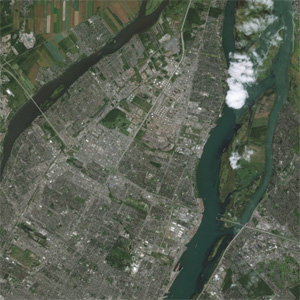
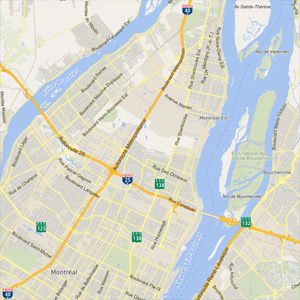
Length of line route by municipality
- Municipality Length (km)
- Stukely-Sud 7.5
- Lawrenceville 1.1
- Sainte-Anne-de-la-Rochelle 3.9
- Bonsecours 7.6
- Total 20.1
The proposed line route begins at Stukely substation and then heads northward along the west side of the 49‑kV line right-of-way for roughly 1.5 km before turning west. The route is partially on sloped land, which will limit the visual impact on the landscape. It avoids populated areas and sugar maple stands as much as possible before again rejoining the 49‑kV line right-of-way at the Chemin Aimé-Dufresne intersection.
Approximately 500 m north of Chemin du Lac, the line route crosses the 49‑kV line and heads east to avoid the center of Lawrenceville and surrounding farmland. The line route then heads northward to connect with the substation located along Chemin Malboeuf, avoiding populated areas and farmland as much as possible.
Towers of the new 230 kV Stukley – Bonsecours supply line
Types of towers to be used
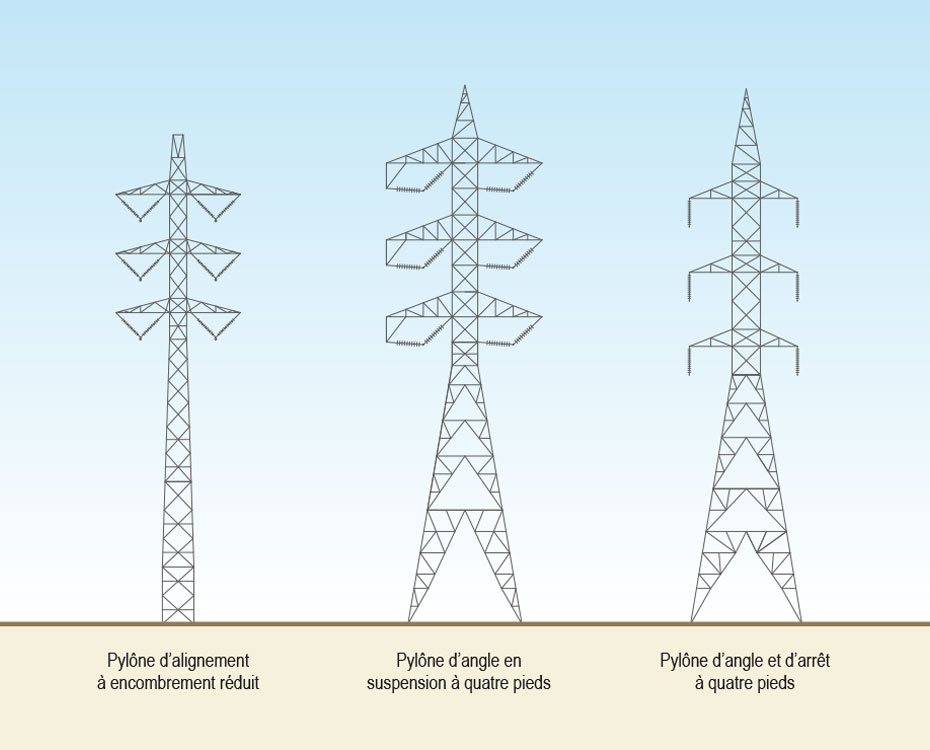
Reduced-footprint lattice tower
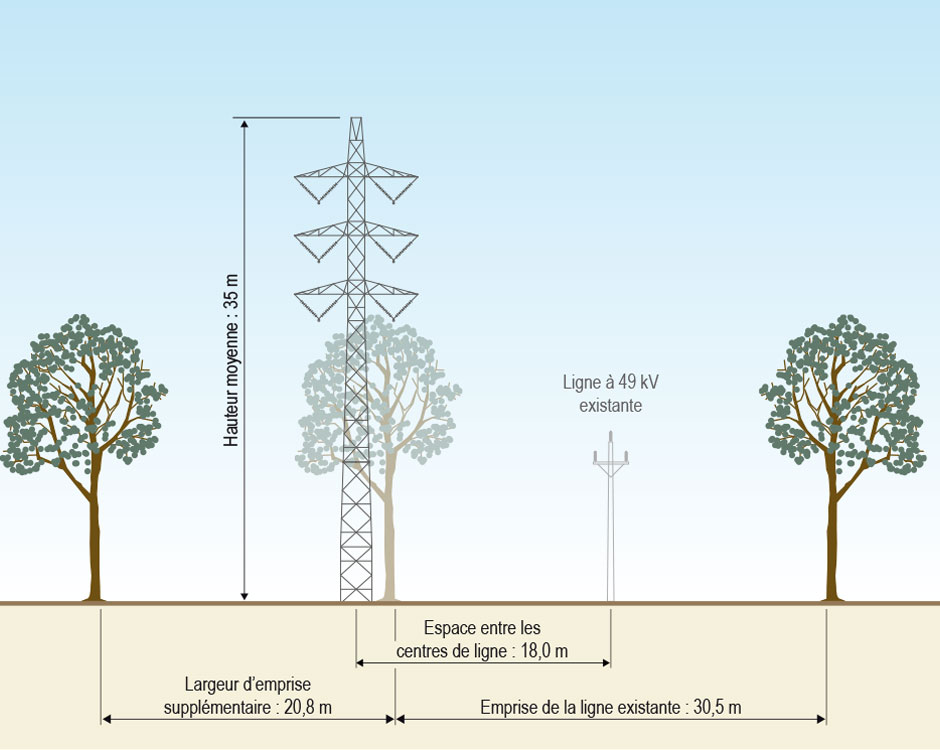
Reduced-footprint suspension tower
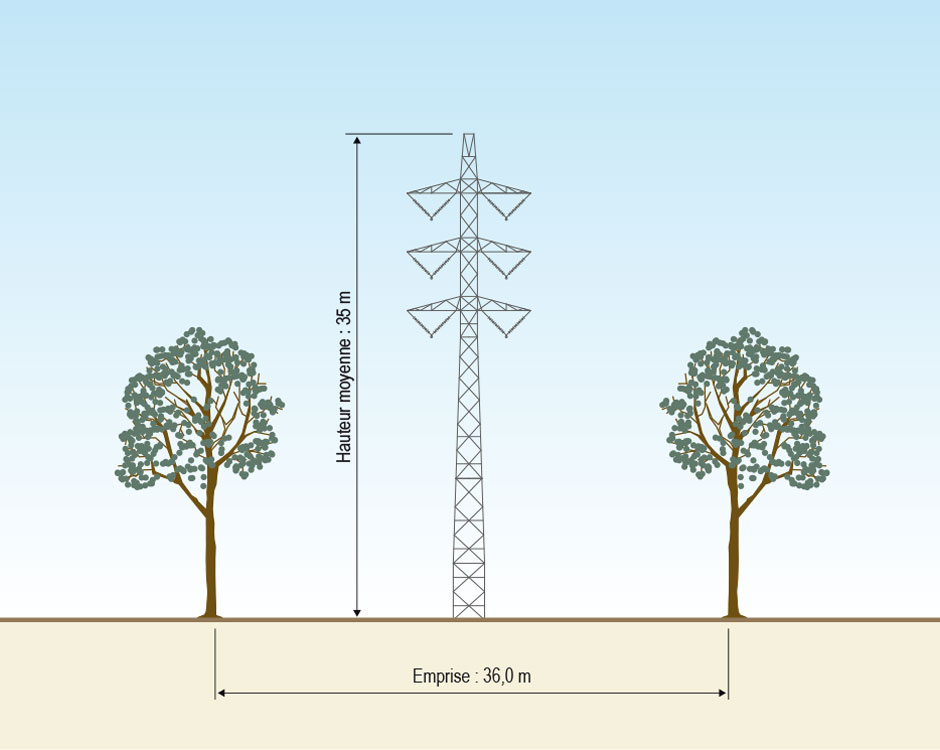
Work
Hydro‑Québec has obtained all the necessary government approvals to begin the construction of the 230/25‑kV Bonsecours substation and 230‑kV supply line.
Land clearing and the building of access roads for the construction of Bonsecours substation and supply line and the expansion of Stukely substation will begin in January 2025.
Steps involved in building a substation
Establish the work zone
Before carrying out any work, it is important to establish the work zone and fence it off to ensure the safety of the access points.
Prepare the substation site
At this step, any trees growing in the work zone are cut down. Then, the ground is levelled and earthwork is carried out.
Excavate and lay the foundations
At this step, workers excavate the site, build the formwork, install the reinforcements and pour the concrete. In addition to laying the foundations, we build all the underground concrete structures, such as the recovery basin.
Installation of the grounding grid
The grounding grid is installed to ensure the safety of people and equipment. Buried underground, the grid redirects the fault current.
Construction of control building
As its name suggests, the command building houses the control and protection equipment.
Backfill the foundations and substation yard
Once the foundations have been laid, we backfill them and level the yard with granular material (sand, gravel, rock, etc.) that is adapted to the site.
Assembly of steel structures
Once the concrete is set, steel structures are assembled to support the electrical equipment.
Installation of electrical equipment
Once the framework is built, we install the equipment on the foundations and steel structures.
Landscape and carry out the final inspection
The project ends with landscaping: we plant trees, create mounds of earth and do more work if necessary.
Steps in line construction
1. Access road development
Work may involve upgrading existing roads and building temporary ones, but always with a view to protecting sensitive environments. For existing roads, Hydro‑Québec makes every effort to promote shared and safe use. On private lands, the company negotiates temporary access with the affected owners.
2. Land clearing
Land clearing consists in felling trees within the right-of-way of the future line and along temporary access roads outside the right-of-way. On private lands, clearing work may be done by contractors or the landowner, to whom the felled timber belongs.
3. Installation of tower foundations
This step involves excavation, filling and leveling. The foundations vary according to the type of tower and the nature of the soil.
4. Tower assembly and cable stringing
There are a number of operations in this step: assembling the towers on the ground and erecting them, and installing insulator strings, conductors and ground wires.
5. Site restoration
This final step involves cleaning up the worksites, leveling and reshaping the ground, filling ruts, seeding worksites around towers and restoring infrastructure (roads, bridges and culverts, fences, etc.). On private land, Hydro‑Québec conducts a site visit with the landowner to ensure that the restoration work meets their expectations.

Work schedule and jobsite surveillance
Work on the route’s southern section, on the border with Maine, is scheduled to start in January 2024. Work will then progress northwards to reach Appalaches substation, with a view to commissioning the line by late 2025. Hydro‑Québec will supervise the jobsite in compliance with applicable technical, environmental and safety requirements. Specific measures to mitigate the impact of the work will be implemented for harmonious coexistence with land users.

New 230/25‑kV Bonsecours Substation and 230‑kV Supply Line [in French only]
Stay informed on the stages of the project and the progress of work.
Subscribe to the newsletter