
Upgrading the power transmission system between the Saraguay and Reed substations and construction of of Toupin substation.
- Region
- Montréal
- Status
- Under study
- Type
- Transmission
- Expected commissioning
- 2031
The current Reed substation, in service since 1958, supplies nearly 44,000 customers in the Ahuntsic‑Cartierville and Saint‑Laurent boroughs. It is operating at full capacity and will soon reach the end of its useful life. It will be replaced by Toupin substation.
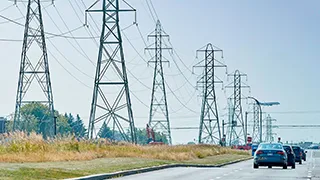
Project description
Hydro‑Québec is continuing its work to upgrade the power transmission system between Saraguay and Reed substations, including the construction of Toupin substation.
The project aims to ensure the grid's long‑term operability, increase capacity and improve service quality in the Ahuntsic‑Cartierville and Saint‑Laurent boroughs.
Reed substation is currently operating at full capacity and will soon reach the end of its service life. It must be replaced with a 315‑kV substation, namely, Toupin substation. Given the opening of the Bois‑Franc REM station and the transit‑oriented real estate development nearby, the new substation will be built on a different site than that of Reed substation. It will be located on Rue Duchesne in Saint‑Laurent.
A line must also be built to connect the existing Saraguay substation to the new Toupin substation.

Project schedule
-
2024–2026
Draft design phase: technical studies, environmental assessment and public consultation
-
2026
Presentation of the optimized solution
-
2026–2028
Government permitting
-
2028–2031
Construction
-
2031
Commissioning
What are the benefits for customers and the grid?
- Upgrading the power transmission system and replacement of equipment nearing the end of its service life.
- Increase of transmission capacity and improvement of service quality.
- Improvement of the grid's reliability and resilience as weather events become increasingly intense.
Technical studies, environmental processes, and public consultation
Since 2024, public consultation activities have been organized with residents, community organizations and municipal partners to take note of concerns and determine how best to minimize impacts of the work on the surrounding area.
Environmental studies have also been conducted (notably to inventory plant and wildlife species in the study area) and mitigate the project's impact on the environment. Additional technical studies will be carried out in the coming months to complete the data collected.
In keeping with the Environmental Quality Act, Hydro‑Québec must now file the environmental impact assessment for review with the Bureau d'audiences publiques sur l'environnement (BAPE).
Once the ministry issues its ruling, Hydro‑Québec will plan the project's next phases, with construction currently scheduled from 2028 to 2031. More information will be shared as the project progresses.
Study area
Hydro‑Québec has identified a preliminary study area within which it will determine the location of the new substation and plot the supply line route. The study area includes all biophysical and human elements that are likely to be affected by the project.
The study area covers a total of 5.47 km2 within the area bounded by autoroute Chomedey (Autoroute 13) to the west, boulevard Marcel‑Laurin (route 117) to the east, boulevard Henri‑Bourassa Ouest to the south, and the rivière des Prairies, boulevard Gouin Ouest and rue Laurin to the north.
Presentation of the optimized solution
In recent months, Hydro‑Québec has gained a better understanding of the land, identifying sensitive elements in the area to determine the optimal solution with the smallest impact on the environment.
Further information will be communicated shortly.
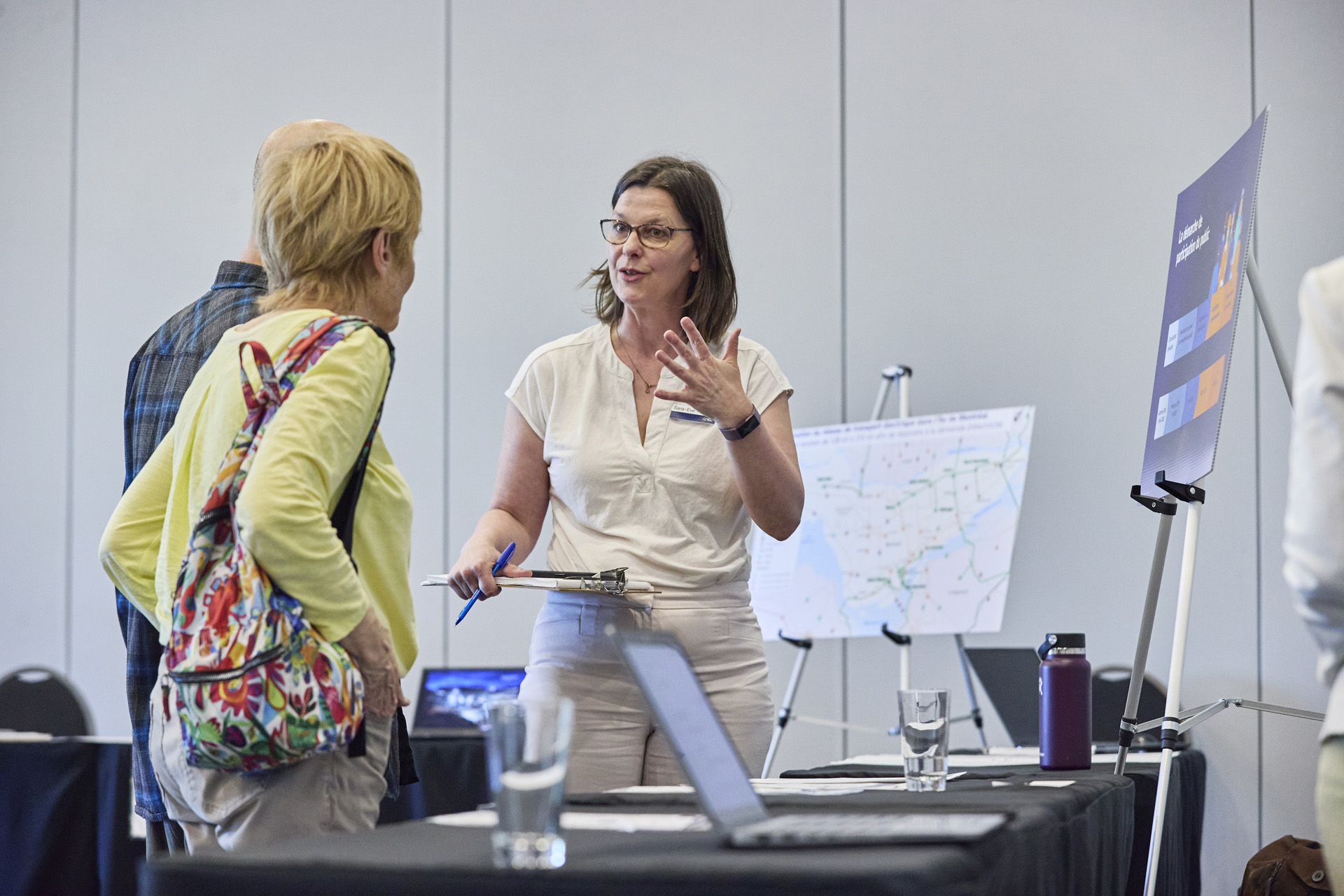
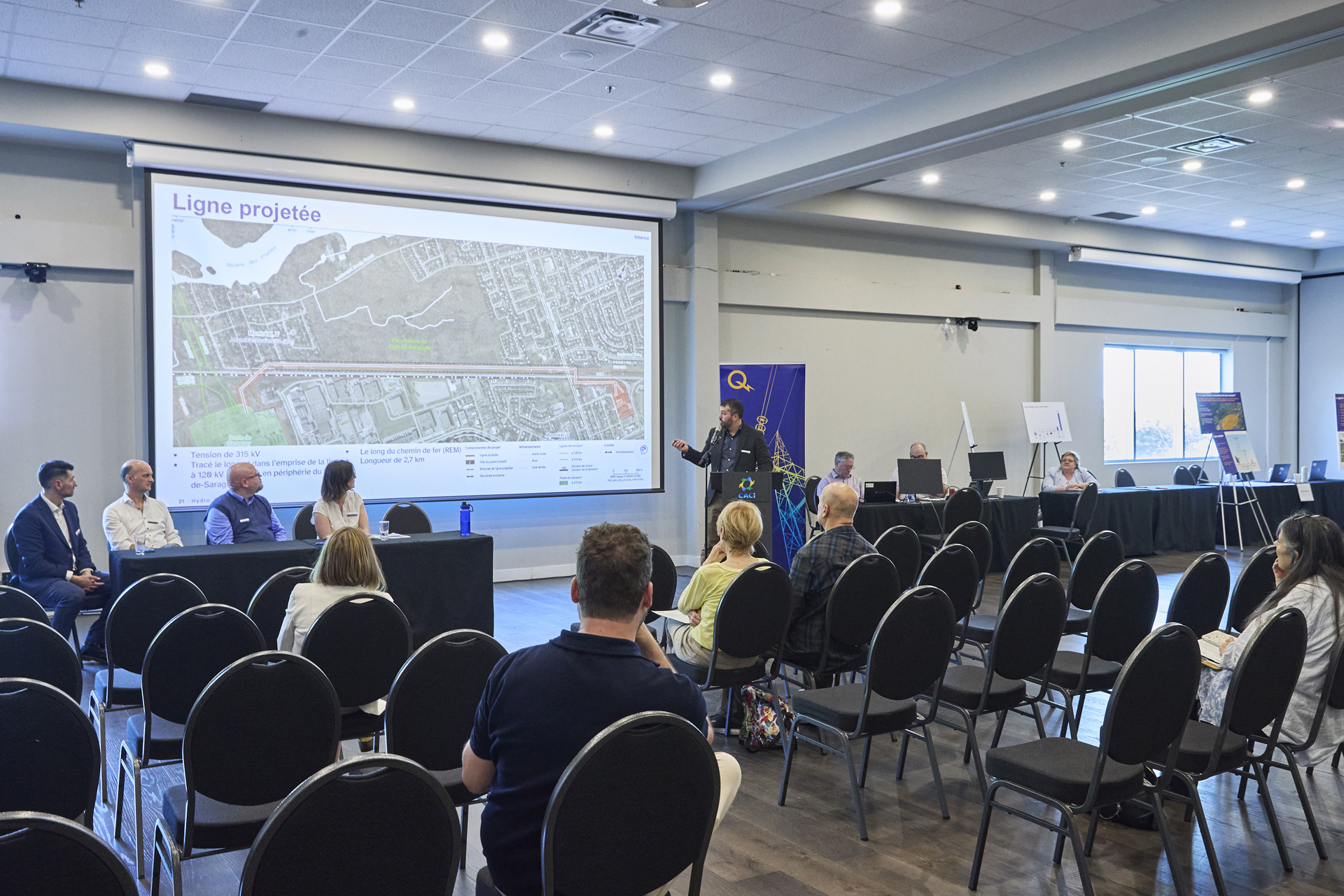
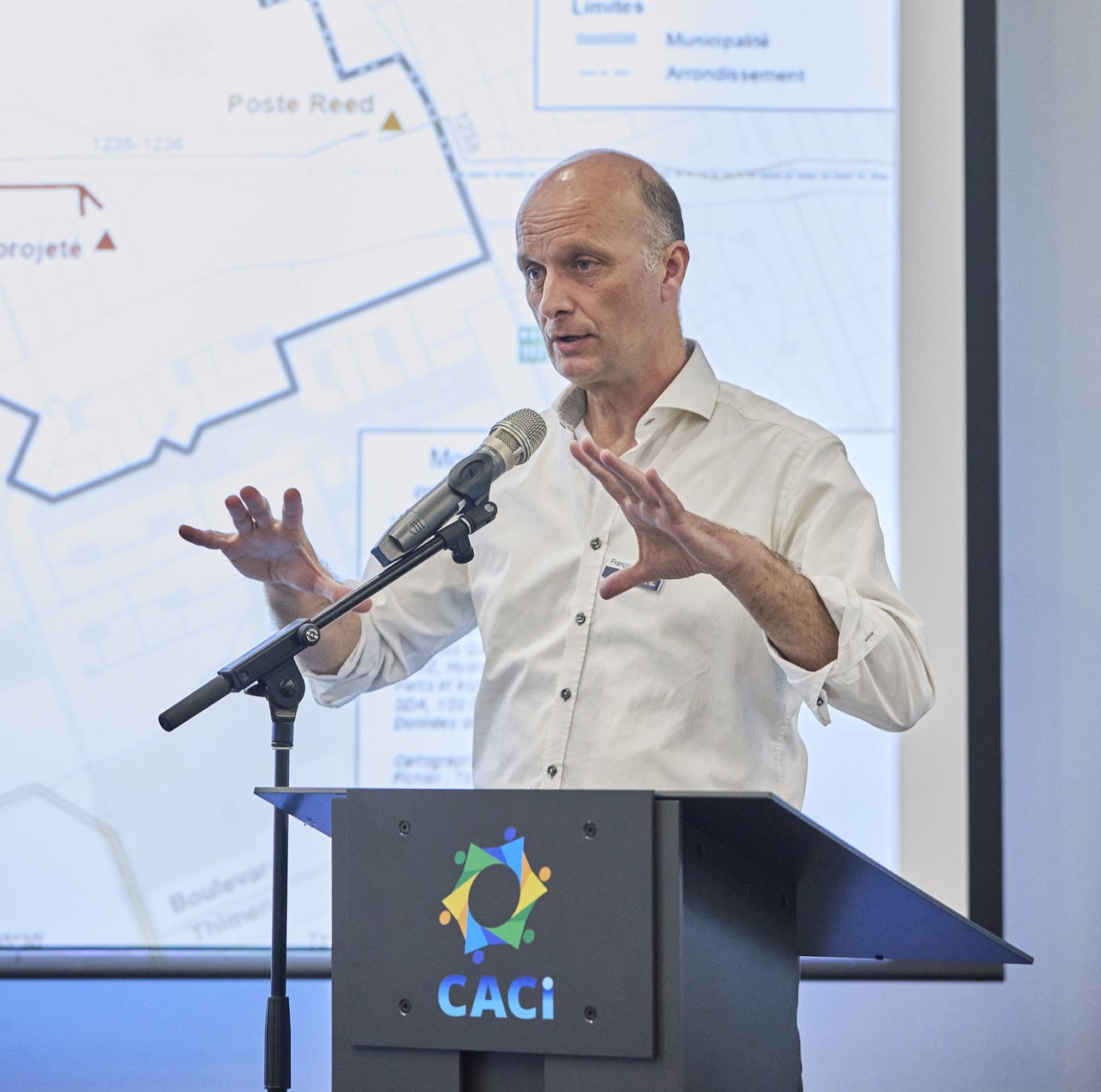
Open house in Ahuntsic‑Cartierville
Hydro‑Québec held a first open house on June 4, 2025 at the Centre d'appui aux communautés immigrantes, located at 12,049 Boulevard Laurentien, in Montréal.
Participants had the opportunity to meet Hydro‑Québec specialists and attend a presentation of the project.



The essential role of electrical substations
What is an electrical substation?

Explore an electrical substation. See the vital role it plays in transmitting and distributing power from the generating station to the home.
Running time: 4 minutes 41 seconds [in French only]
Integrated Enhancement Program
Support of a local initiative
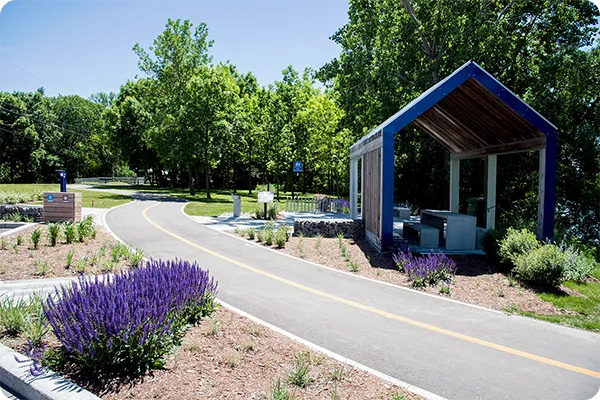
Hydro‑Québec will support a local initiative as part of its Integrated Enhancement Program (IEP) to improve the community's quality of life and environment.
FAQ
Consult our FAQ to find answers to questions about the project and our environmental approach.
The existing 120-kilovolt (kV) Reed substation is operating at full capacity and will soon reach the end of its service life. It must be rebuilt to improve service quality and to increase the reliability and resilience of the grid in response to the increasingly intense weather events brought about by climate change.
The 120‑kV line connecting Saraguay substation and the existing Reed substation must also be replaced: the new 315‑kV line to be built will connect Saraguay substation and the new Reed substation.
Located on Rue Keller in the Saint‑Laurent borough, the current substation is too small to accommodate the new electrical equipment. In addition, at the borough's request, the site of the existing substation will be integrated into a transit‑oriented development when the Réseau express métropolitain (REM) is commissioned. The new substation will therefore be built at a different location, on Rue Duchesne, at a distance from Saraguay substation that meets Hydro‑Québec's requirements.
Hydro‑Québec plans to build the new line north of the REM route, near the 120‑kV line that currently runs between Saraguay and Reed substations. This route has the advantage of reusing an existing corridor and right‑of‑way, minimizing impacts on the natural and built environments.
The project is in the presentation and consultation phase. We are currently gathering data to gain a better understanding of the natural and human environments and will eventually share an optimized project plan. The next phase is the government approvals process. Construction is expected to begin in 2028.
Hydro‑Québec plans to build the new line within the limits of the existing right‑of‑way. Some trees may have to be cut, but to minimize clearing, it plans to install towers that are taller than the trees.
Hydro‑Québec considered building the line south of the REM tracks. This option was not selected as it would have a greater impact on the area. It would require relocating residents and businesses and demolishing buildings. The route north of the REM tracks allows Hydro‑Québec to use its existing energy corridor.
To reduce the visual impact of the new line, the towers will be built as far as possible from residences. Visibility analyses will be conducted accordingly. If you have any concerns, please contact us (see the contact information at the bottom of the page).
The public health authorities of Canada and Québec agree that the electric and magnetic fields we are exposed to daily do not pose a health risk. For more information, go to: https://www.hydroquebec.com/fields/.
Studies show that there is no risk. For more information, go to: https://www.hydroquebec.com/fields/exposure/.
Documentation
Contact us
We're committed to keeping the lines of communication open. Please send us your questions and comments about the project.
Info‑Project line: 1 866 388‑1978

