
Nord-du-québec Potential La Grande capacity upgrades
The generating units at Robert‑Bourassa, La Grande‑3 and La Grande‑4 generating stations in Eeyou Istchee Baie‑James must be replaced, which makes it possible to consider increasing their installed capacity. Hydro‑Québec is working closely with the Cree and Jamesian communities to assess the impacts of occasional higher flow rates while maintaining current operating levels, in compliance with the parameters set out in the James Bay and Northern Québec Agreement.

Description
Equipment upgrades to better meet winter power demand
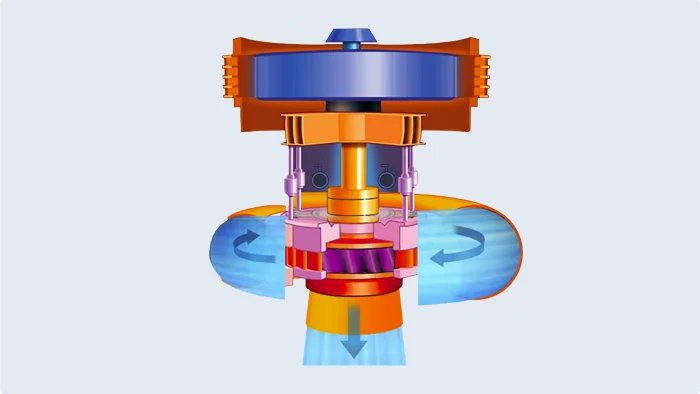
The potential capacity increase would aim to optimize operations at the existing facilities by replacing the generating units that are reaching the end of their service life with newer, more efficient models. This would allow Hydro‑Québec to better meet electricity demand during winter peaks while operating its generating stations safely and reliably.
Generating station commissioning dates
-
1981
Robert-Bourassa
-
1984
La Grande-3
-
1986
La Grande-4

Did you know?
Ayimihiituunaanuwich, which means “dialogue” in Cree, is the name of the joint process established by Hydro‑Québec and the Cree Nation Government to assess the technical, environmental, social and cultural aspects of the potential capacity increases at La Grande.
A unique context: Eeyou Istchee Baie‑James
The central role of three Cree communities in the Ayimihiituunaanuwich Joint Process
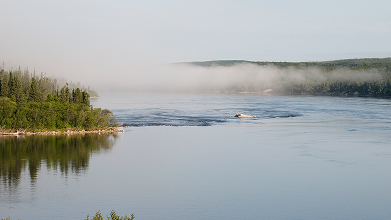
The La Grande hydroelectric complex is located in Eeyou Istchee Baie‑James, an area governed by the James Bay and Northern Québec Agreement (JBNQA). La Grande Rivière is known as Chisasibi in Cree (chisa, “great,” and sibi, “river”). This mighty waterway is at the heart of life in Chisasibi (Chisasibi Eeyouch in Cree) and of the identity of its people. The three generating stations that are the subject of the potential upgrades are located on the river, which places the Cree Nation of Chisasibi in a unique position. The Cree Nations of Wemindji and Mistissini are likewise concerned by the potential capacity increases at the La Grande complex, given their proximity to these facilities.
Eeyou Istchee James Bay Regional Government (EIJBRG)
The Eeyou Istchee James Bay Regional Government (EIJBRG) was established in 2014 to succeed the Municipality of Baie‑James. It exercises the powers of a municipality and a regional county municipality on Category III lands. Its governance is ensured by a board of directors composed of 23 people, 11 representatives of the Cree communities, 11 representatives of the Jamesian communities and a representative of the Government of Québec. The organization is led alternately by an elected Jamesian official and the Grand Chief of the Cree Nation, for two‑year terms.
The locality of Radisson is established at the very end of Billy Diamond Highway near Robert‑Bourassa generating station and is a living environment for Jamesians and Hydro‑Québec workers.

Preliminary schedule
-
2025 and 2026
Field surveys for the environmental studies and drafting of the environmental assessment
-
2026 to 2029
Engineering, procurement and preparatory work
-
2027 to 2028
Government approvals (COMEX)
-
2030 to 2041
Replacement and commissioning of one generating unit per year per generating station

Environmental approach
Hydro‑Québec and the Cree Nation established the Ayimihiituunaanuwich Joint Process to assess the technical, environmental, social and cultural aspects of the potential capacity upgrades to Robert‑Bourassa, La Grande‑3 and La Grande‑4 generating stations.
While the Main Table supervises the overall process, the Technical Table is tasked with developing and implementing the environmental assessment program. The goal of this program is to draw up a current portrait of the natural and social environment, as well as assess the scope and impacts of the potential capacity increases. These could eventually be used to obtain government approvals.
For a description of the various environmental studies and their location, see the environmental studies program and the map.
Studies and field activities 2025
-

Spring
- Water quality
- Fish habitats – also in 2026
-

Summer
- Bank dynamics
- Archaeology
- Land use and socio-economic profile
- Hydrology and hydraulics
- Water quality
- Fish habitats
-

Fall
- Land use and socio-economic profile
- Water quality
- Fish habitats
-

Winter
- Land use and socio-economic profile
- Water quality
- Hydrology and hydraulics
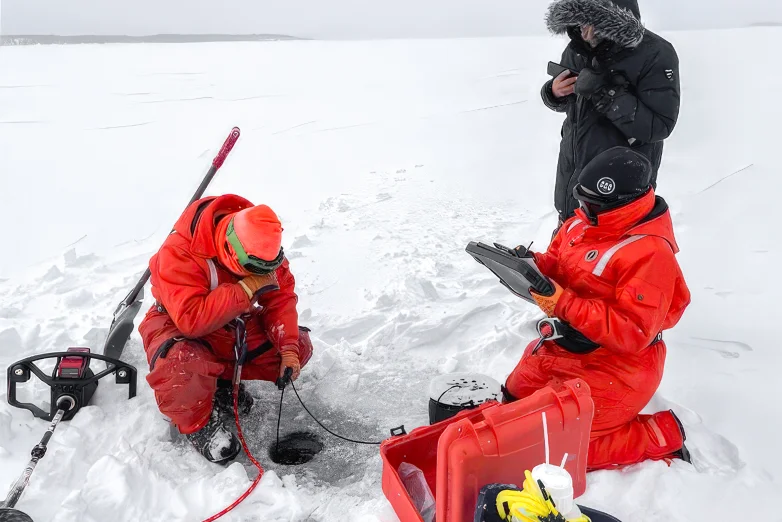
- Ice cover studies – also in 2026
Cree engagement in the environmental assessment
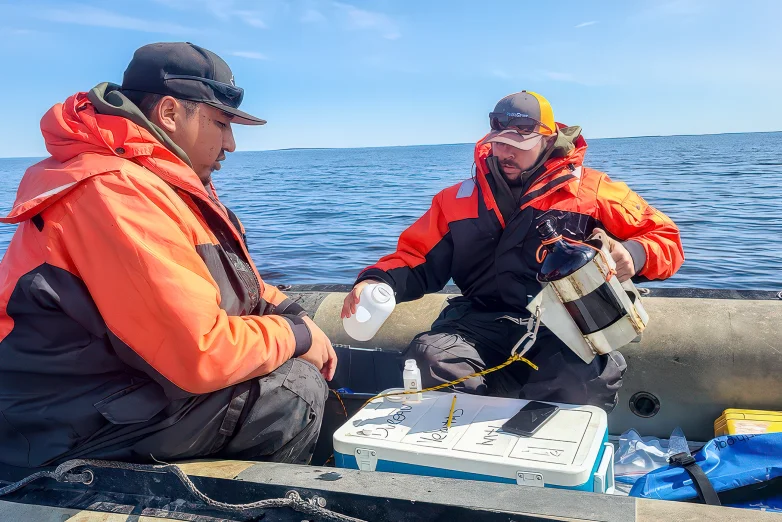
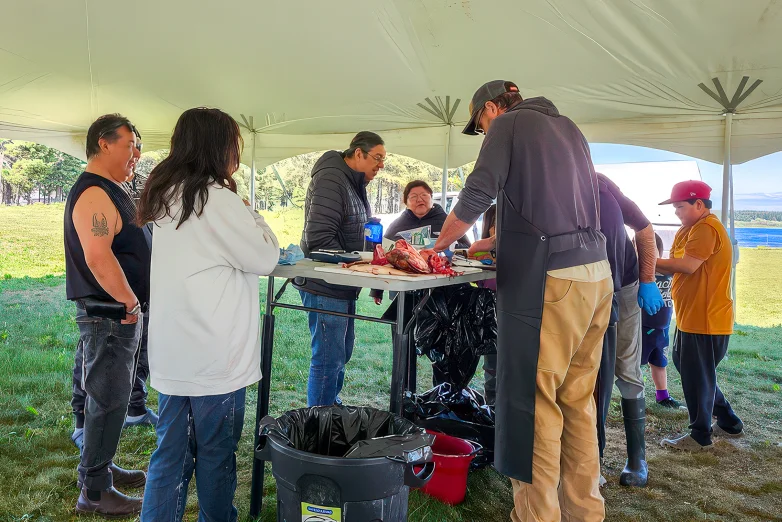
Members of the Cree communities are actively participating in various aspects of the environmental assessment program.

Public engagement
Various information and collaboration initiatives have taken place or are planned with both the Cree and Jamesian communities. For information on upcoming public engagement events, see the bulletin board.
Technical Table
Comprised of representatives from the Cree Nations of Chisasibi, Wemindji and Mistissini, as well as Hydro‑Québec, the Technical Table oversees the environmental studies program.
Early workshop with tallymen and land users
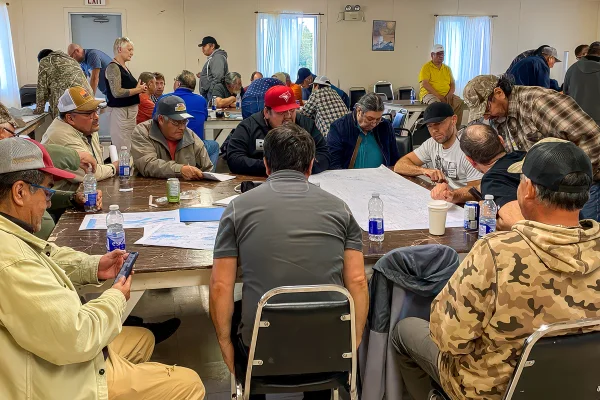
A workshop with tallymen and land users early in the process helped identify concerns and adjust the environmental studies program.
Opportunities for discussion
Meetings, workshops and field visits were held with elected officials and members of the Cree Nations of Chisasibi, Wemindji and Mistissini, as well as with all elected officials from Baie‑James and the executive management of the Eeyou Istchee James Bay Regional Government.
Consultant selection and training
Members of the Cree communities participated in the selection of the consulting team responsible for the environmental studies. The consultants received training to better understand Cree history and knowledge.
Land use study
Several tallymen have contributed their unique knowledge of the territory during land use interviews. Local organizations and vacation leaseholders have also been consulted.
Participation in field surveys
Several members of the Cree communities participated in the environmental field surveys.

Please give us your feedback
Hydro‑Québec would like your input to ensure ongoing dialogue regarding the potential capacity upgrades at the La Grande complex.
FAQs
The generating units in question are at the end of their useful life. Replacing these units with newer, more powerful equipment could allow Hydro‑Québec to better meet electricity demand during winter peaks (periods of intense cold) while maintaining safety and reliability at its generating stations.
These capacity upgrades are part of the overall goal of adding 2,000 MW of capacity by 2035 by optimizing existing generating stations—a key measure of Québec’s energy transition strategy.
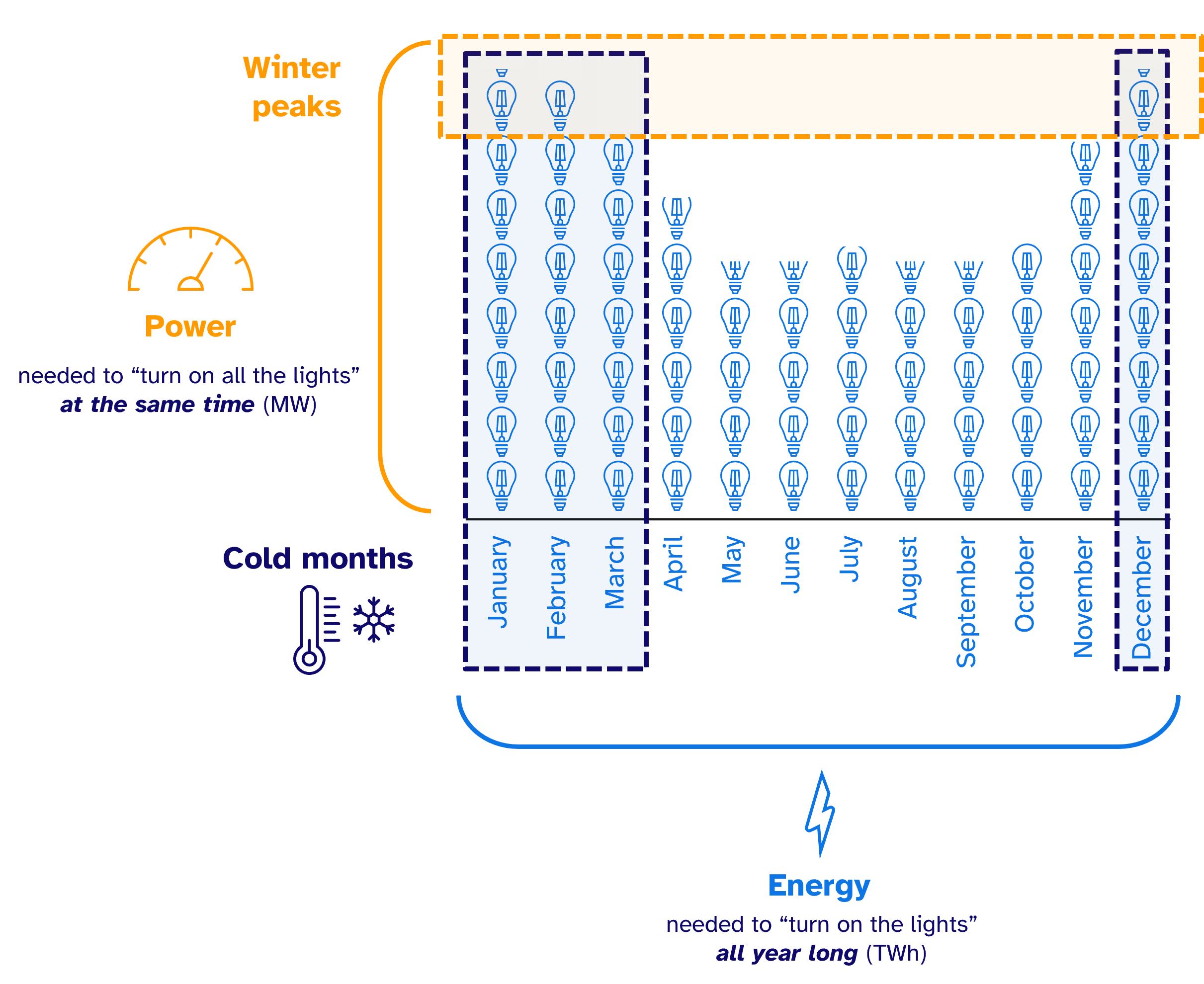
Installing new generating units that are more efficient would increase the generating stations’ capacity to meet peak demand, that is, when everyone needs electricity at the same time. The energy production of each generating station over the course of a year would remain essentially the same and there would be no changes to specified minimum or maximum reservoir levels set out in the James Bay and Northern Québec Agreement.
Ongoing studies predict capacity at Robert‑Bourassa, La Grande‑3 and La Grande‑4 generating stations would increase by a total of approximately 20% by 2041. Hydro‑Québec is continuing the necessary studies to precisely quantify the capacity increases that could result from the replacement of the generating units.
The figure below shows annual electricity consumption in Québec. The light bulbs represent the total annual energy needs, while the number of light bulbs in a given column represents the energy needs for a specific period, e.g., the power required for a given month. Power is needed to turn on all these bulbs at the same time, for example during winter peaks (outlined in orange in the figure below), the most critical periods when the entire production capacity of the generating station is mobilized simultaneously.
To learn more, watch the video The Difference Between Power and Energy.
No. The capacity increases do not involve building any new generating stations or doing any work on dams or dikes. They only involve replacing the generating units and the associated power equipment.
To find out more about the generating units, watch the video on the Robert-Bourassa underground generating station.
These generating stations were built pursuant to the James Bay and Northern Québec Agreement. The potential capacity increases are basically modifications to existing facilities and would therefore require modifications to the existing authorizations. There will be no modification to the existing maximum and minimum levels established in the JBNQA.
Hydro‑Québec and the Cree Nation established the Ayimihiituunaanuwich Joint Process to assess certain technical, environmental, social and cultural aspects of the potential capacity increases to Robert‑Bourassa, La Grande‑3 and La Grande‑4 generating stations. This process involves mandating a Technical Table to develop and implement an environmental study program, the purpose of which is provide an overview of the current natural and social environment and thus assess the scope and impacts of the potential capacity increases.
Approximately 125 additional workers will be required when work is at its height at each of the generating stations, Robert-Bourassa, La Grande‑3 and La Grande‑4 (in comparison to the roughly 4,000 workers needed to build a new generating station).
The Robert‑Bourassa generating station is near Radisson. For these workers, accommodation would be a hybrid arrangement consisting of rental units in local establishments and buildings. Hydro‑Québec is also assessing the possibility of adding a temporary dormitory.
La Grande‑3 and La Grande‑4 generating stations are located in remote areas. Workers there will be lodged at Lac‑Sakami (La Grande‑3) and Keyano (La Grande‑4) sites.
Hydro‑Québec is aware of the community’s concerns about the impacts on local hunting and fishing. Labour needs are currently estimated at 125 additional workers at the height of the work (in comparison to the roughly 4,000 workers needed to build a new generating station). For the moment, we believe the impacts on hunting and fishing will be minimal.
Hydro‑Québec is aware that road safety is a community concern and is developing mitigation measures to ensure user safety along the Billy Diamond Highway and the Route Transtaïga. The potential upgrade works will imply few oversized transports each year. Usual safety measures in these cases could involve prior public notices, escorts and signage.
Hydro‑Québec gives particular attention to the economic benefits of its operations and projects for the Cree communities and local population. There will be concerted efforts to identify economic spin‑off possibilities and means to achieve them with Crees and local stake holders.
Capacity increases at La Grande will support the Action Plan 2035: Towards a Decarbonized and Prosperous Québec, which charts the course for the energy transition. Beyond simply shifting from energy sources that pollute to clean energy sources, the transition is an opportunity to create lasting prosperity for all Quebecers.
The time has come to secure our energy independence while keeping supply costs affordable for future generations. This is a prime opportunity to develop new industries, propel young entrepreneurs into promising sectors and create stimulating jobs across Québec, particularly in energy infrastructure development.
To implement its Action Plan 2035, Hydro‑Québec has launched an ambitious energy efficiency pathway that will support the economy and collective well‑being. As well as helping customers cut their energy costs, energy efficiency measures will support the economy by creating over 5,000 new jobs across Québec. Three key initiatives will target all customer segments:
- A program offering Canadian smart thermometers at no cost to residential customers
- A partnership focused on exemplary building energy management practices for business and institutional customers
- Personalized support for industrial customers
Videos
A tour of the Robert-Bourassa underground generating station

Water from Robert‑Bourassa reservoir flows down to the generating units in the underground generating station, where it powers the generating unit to produce electricity before returning to the river. Technological improvements over the past 40 years have enabled modern turbines to generate more torque (power output), making it possible to increase the power plant's installed capacity.
Running time: 1 minute
All about winter peaks
During periods of intense cold, electricity use increases sharply due to home heating. At these times, Hydro‑Québec’s grid comes under intense pressure, with every generating station running at full capacity to keep Quebecers warm and comfortable.
Running time: 2 minutes
Documentation
General information
Community updates
Contact us
We’re committed to keeping the lines of communication open. Please send us your questions and comments about the project.
Info-Project line: 1 866 388‑1978
Patrick Compartino
Advisor – Community Relations Nord-du-Québec
Luc Duquette
Advisor – Relations with First Nations and Inuit