
Appalaches–Bas‑Saint‑Laurent
- Region
- Bas‑Saint‑Laurent
- Status
- Under study
- Type
- Transmission
- Expected completion
- 2034
The Appalaches–Bas‑Saint‑Laurent project will strengthen the Eastern Québec power system in order to improve reliability, accommodate additional renewable energy sources, and support sustainable development in keeping with Hydro‑Québec's strategic directions.
Overview
Infrastructures to support the energy transition and power system reliability
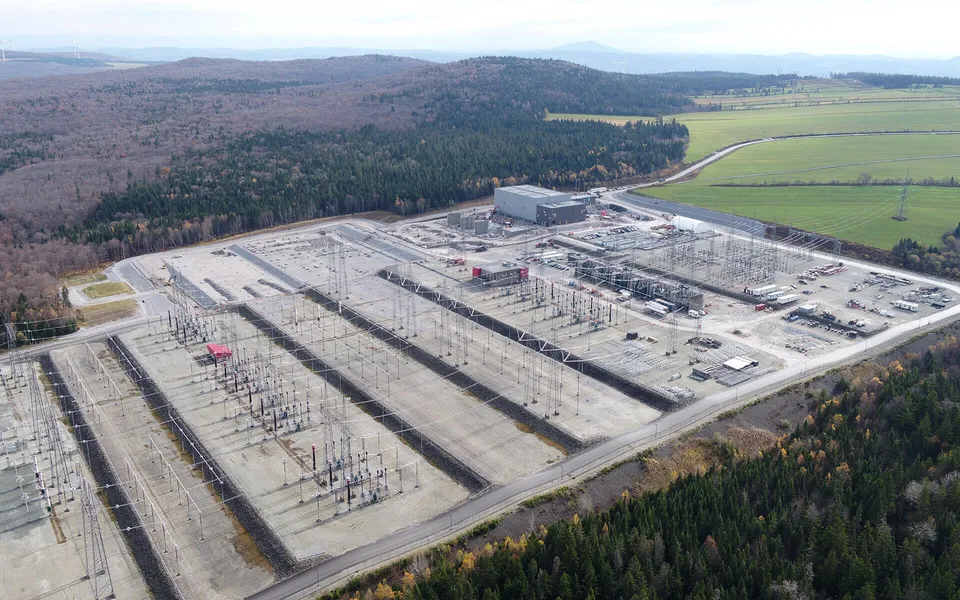
The Appalaches–Bas‑Saint‑Laurent project involves building new transmission infrastructures to meet growing energy needs and support the development of wind power in Eastern Québec. The study area crosses the Chaudière‑Appalaches and Bas‑Saint‑Laurent regions, as well as the Avignon regional county municipality (MRC) in Gaspésie.
The project will be carried out in two phases.
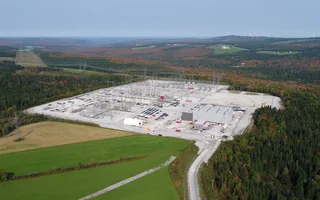
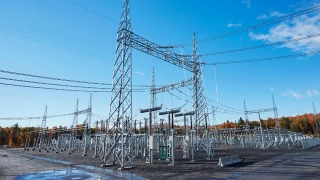
- Phase 1 involves building a 315‑kV substation and approximately 260 km of 315‑kV transmission lines. Commissioning is slated for 2034.
- Phase 2 involves building a second 315‑kV substation and approximately 175 km of 315‑kV transmission lines. Commissioning is planned for 2036.
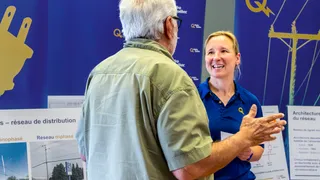
The work includes technical studies, environmental assessments, public consultations, obtaining government approvals, and clearing and construction activities. Hydro‑Québec is reviewing different line routes to take into account the area's characteristics, natural environments and existing land uses while seeking to minimize project impacts. Discussions with local stakeholders will continue throughout each project stage to incorporate community concerns and optimize the deliverables.
Not to be missed

We want to hear from you!
Hydro‑Québec is committed to keeping the dialogue open about the proposed line routes. Tell us what you think!
Line routes and visual simulations
Organized by geographic sectors, these simulations illustrate the potential appearance of the infrastructure within the landscape from various vantage points across the territory.
Simulations by sector
- Visual simulation 1 [PDF 1.03 MBmegabytes – in French only]
- Visual simulation 2 [PDF 956 kBkilobytes – in French only]
- Visual simulation 3 [PDF 1.69 MBmegabytes – in French only]
- Visual simulation 4 [PDF 1.39 MBmegabytes – in French only]
- Visual simulation 5 [PDF 944 kBkilobytes – in French only]
- Visual simulation 6 [PDF 664 kBkilobytes – in French only]
- Visual simulation 7 [PDF 21.5 MBmegabytes – in French only]
- Visual simulation 8 [PDF 1.08 MBmegabytes – in French only]
- Visual simulation 9 [PDF 1.09 MBmegabytes – in French only]
- Visual simulation 10 [PDF 1.00 MBmegabytes – in French only]
- Visual simulation 11 [PDF 1.01 MBmegabytes – in French only]
- Visual simulation 12 [PDF 1.21 MBmegabytes – in French only]
- Visual simulation 13 [PDF 1.20 MBmegabytes – in French only]
- Visual simulation 14 [PDF 1.21 MBmegabytes – in French only]
- Visual simulation 15 [PDF 1.20 MBmegabytes – in French only]
- Visual simulation 16 [PDF 897 kBkilobytes – in French only]
- Visual simulation 17 [PDF 898 kBkilobytes – in French only]
- Visual simulation 21 [PDF 1.21 MBmegabytes – in French only]
- Visual simulation 22 [PDF 1.14 MBmegabytes – in French only]
- Visual simulation 25 [PDF 966 kBkilobytes – in French only]
- Visual simulation 18 [PDF 1.05 MBmegabytes – in French only]
- Visual simulation 19 [PDF 1.22 MBmegabytes – in French only]
- Visual simulation 20 [PDF 1.19 MBmegabytes – in French only]
- Visual simulation 23 [PDF 1.21 MBmegabytes – in French only]
- Visual simulation 24 [PDF 1.73 MBmegabytes – in French only]
- Visual simulation 26 [PDF 1.56 MBmegabytes – in French only]
- Visual simulation 27 [PDF 1.90 MBmegabytes – in French only]
- Visual simulation 28 [PDF 1.61 MBmegabytes – in French only]
- Visual simulation 29 [PDF 1.54 MBmegabytes – in French only]
- Visual simulation 30 [PDF 1.53 MBmegabytes – in French only]
- Visual simulation 31 [PDF 1.36 MBmegabytes – in French only]
Line route variants
The Appalaches–Bas‑Saint‑Laurent corridor

We are now in the second phase of the consultation process on the study corridor. The consultations held last summer and fall were very constructive and led to the line route variants you see in the video.
Run time: 21 s
Project schedule – Phase 1
This schedule is preliminary; dates may be adjusted as needed. See our page on key project stages to learn more about our structured process.
-
2024–2027
Draft-design stage: Technical studies, environmental assessments and public consultations
-
2027–2029
Government approvals
-
2029–2034
Clearing and construction work
Let's design a project that blends harmoniously into its surroundings
Documentation
-
Project consultation – Winter 2026 [PDF 1.3 MB – in French only]
- Study line route – MRC de L'Islet [PDF 721 kB – in French only]
- Study line route – MRC de Kamouraska and Témiscouata [PDF 640 kB – in French only]
- Study line route – MRC des Appalaches and Lotbinière [PDF 809 kB – in French only]
- Study line route – MRC de Beauce‑Centre, La Nouvelle‑Beauce, Bellechasse and Montmagny [PDF 852 kB – in French only]
- Project consultation – Spring 2025 [PDF 1.3 kB – in French only]
- Project presentation – Fall 2024 [PDF 2.47 MB – in French only]
- Map of sensitive environmental features (1/7) [PDF 7.03 MB – in French only]
- Map of sensitive environmental features (2/7) [PDF 9.10 MB – in French only]
- Map of sensitive environmental features (3/7) [PDF 9.71 MB – in French only]
- Map of sensitive environmental features (4/7) [PDF 9.68 MB – in French only]
- Map of sensitive environmental features (5/7) [PDF 11.3 MB – in French only]
- Map of sensitive environmental features (6/7) [PDF 26.8 MB – in French only]
- Map of sensitive environmental features (7/7) [PDF 52.9 MB – in French only]
- Study corridor – Spring 2025 [PDF 1.8 MB – in French only]
- Study area map – December 2024 [PDF 815 kB – in French only]
Frequently asked questions
Find answers to the most common questions about the project.
No. The Appalaches–Bas‑Saint‑Laurent corridor project calls for the construction of an overhead transmission line.
In Québec, only 1% of transmission lines are buried across the entire 34,000‑km network. Burying lines is done only in very specific contexts, for example in downtown Montréal, where space is so constrained that it is virtually impossible to find the room needed to install overhead lines.
Québec's grid spans very long distances to transmit energy from production centers to consumption areas. Extra high voltage overhead lines make it possible to carry our renewable energy over hundreds of kilometers while maintaining a stable voltage level, which is a major technical challenge. Moreover, undergrounding reduces transmission capacity: to maintain voltage, a substation would need to be installed approximately every 5 km.
We held consultations in spring 2025 to present the project and line corridor and gain a better understanding of the territory.
Considering the technical and environmental criteria and the comments, concerns and input we received, our project team is currently developing route variants for the transmission line project that will run through your region.
We will communicate these variants soon.
We plan to share the route with the least impact in fall 2026.
Considering the technical and environmental criteria and the comments, concerns and input we received as part of the consultations held last spring, our project team is currently developing route variants for the transmission line project.
The options will soon be presented for consultation. In 2026, Hydro‑Québec will also conduct environmental inventories on the site to more accurately document the project's potential impact and determine effective mitigation measures.
The entire process will be set out in an environmental impact statement we will file with the Ministère de l'Environnement, de la Lutte contre les changements climatiques, de la Faune et des Parcs.
Our team will inform the property owners affected by the route variants and invite them to take part in consultation activities to discuss the project and share their thoughts and suggestions on the different options.
Once the variant with the least impact is selected, members of our acquisitions and real estate services team will contact each affected property owner directly to identify the rights to be acquired. Each situation will be assessed to determine the appropriate financial compensation according to the terms of the Hydro‑Québec–UPA Agreement on the Siting of Power Lines on Farms and in Woodlands. Affected property owners will be able to count on support at every stage of the process.
Transmission lines built to standard usually do not generate stray voltage because the electric and magnetic fields around them are well below thresholds recognized as hazardous.
Observed instances of stray voltage generally come from:
- grounding defects;
- non-compliant electrical installations in buildings;
- metal structures connected to the ground;
- defective farm equipment.
See the guide Les tensions parasites à la ferme [PDF 1.2 MBmegabytes – in French only] for more information.
Hydro‑Québec is committed to ensuring its facilities blend into the landscape as seamlessly as possible. When planning new transmission lines, our goal is to minimize their visual impact, preserve the landscape and foster compatibility with other land uses.
Our teams use specialized digital tools throughout the project design phase to limit the visual impacts of any new transmission infrastructure.
This short video (in French) explains our approach.
For a 315‑kV line, the right‑of‑way is generally 60 to 70 metres wide. The width varies depending on the area's specific features and constraints, such as hills, waterways, maple stands, other public infrastructure and farmland.
Our goal is to determine the line route with the least impact and effective mitigation measures.
The preservation of maple stands, as well as other sensitive elements including landscapes, natural environments, populated areas and other agricultural activities, is among the main concerns expressed during the consultations. We consider these elements very carefully when developing line route options.
The owners of all types of property, including maple stands, will be compensated if Hydro‑Québec must acquire a servitude on the land.
Each situation will be assessed to determine the appropriate financial compensation according to the terms of the Hydro‑Québec–UPA Agreement on the Siting of Power Lines on Farms and in Woodlands, which includes specific provisions for land developed for maple operations.
Very early on in the consultation process, several local organizations and stakeholders suggested using public land as much as possible to limit the project's impact on private property.
That said, to minimize the line's impact, Hydro‑Québec rigorously assesses each line route variant, whether it crosses public or private land.
The construction of a 315‑kV transmission line isn't directly linked to the rollout of the three‑phase system, which relies on local 25‑kV distribution infrastructure.
However, adding a transmission line can help increase the system's capacity in a particular region. In the long term, that could facilitate certain development projects including access to the three‑phase system.
A government assistance program (in French) managed by the Ministère de l'Environnement, de la Lutte contre les changements climatiques, de la Faune et des Parcs supports agricultural operations in rural areas by financing part of the costs to connect to the three‑phase system and advance the energy transition.
Hydro‑Québec aims to reduce electricity use by 21 TWh by 2035, which is equivalent to the consumption of one in four Québec homes. To do so, it will invest $10 billion in measures including:
- No-cost smart thermostats for homes
- Exemplary building partnerships in the commercial sector
- Tailored support for industrial companies
These initiatives cost three times less than adding new supply sources and help advance Québec's energy transition.
The Appalaches–Bas‑Saint‑Laurent project component is intended to support wind energy development in the Est du Québec region.
Hydro‑Québec is committed to an unprecedented energy transformation. By 2035, we plan to add 10,000 megawatts (MW) of new wind capacity in Québec. The increase will support the province's decarbonization, help meet the growing demand for electricity and strengthen Québec's energy self-sufficiency.
With that in mind, two development models will coexist: major projects of more than 1,000 MW led by Hydro‑Québec in partnership with municipalities and First Nations communities and standard projects undertaken subsequent to calls for tenders.
Contact us
We're very keen on keeping the lines of communication open. Please send us your questions and comments about the project.
Info‑Project line: 1 866 388‑1978
Ariane Doucet‑Michaud
Advisor – Regional Affairs
affairesregionales@hydroquebec.com
Pierre‑Antoine Morin
Advisor – Relations with First Nations and Inuit
Morin.Pierre‑Antoine@hydroquebec.com

Newsletter Upgrading the main transmission system – Appalaches–Bas‑Saint‑Laurent
Would you like to be informed about project progress and the consultation activities that have been scheduled?