
A new substation to support development in downtown Montréal
- Region
- Montréal
- Status
- Under study
- Type
- Transmission
- Expected end date
- 2034
Construction of a fully indoor substation to support downtown development, restoration of a heritage building and integration of new uses to create a balanced living environment.

Project Update
Following the information session held on June 16, 2026, at Marché Bonsecours, the documents presented are now available in the Documentation section.
Project Overview
Power that keeps pace with downtown development
Downtown Montréal is experiencing significant growth, with major real estate projects and initiatives to decarbonize buildings and electrify transportation. Major institutions and new neighbourhoods like the Quartier des lumières, Îlot Voyageur and Quartier Molson require reliable and sustainable electricity supply.
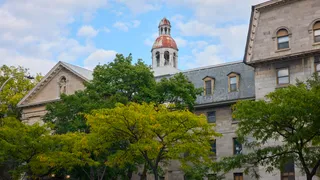
To support this growth and meet demand, Hydro‑Québec will build a fully indoor substation on the former site of the Institut des Sœurs de Miséricorde
Taking an innovative approach for this project enables us to upgrade two substations‑Berri and Dorchester‑from a single new facility built on the former site of the Institut des Sœurs de Miséricorde. Located at the intersection of the sectors supplied by Berri and Dorchester substations, this "pivot substation" will efficiently support both neighbourhoods through a system reconfiguration.
Don’t miss it
Your feedback matters
Share your perspectives, concerns and expectations regarding the project
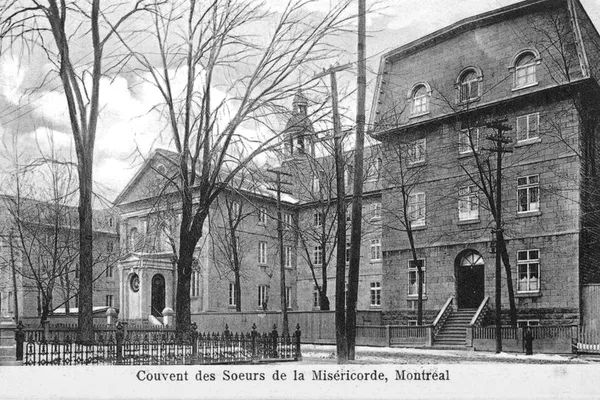
A site rich in history, a project focused on the future
The former site of the Institut des Sœurs de Miséricorde is a heritage landmark that preserves history and stands as an important symbol for the community. Our goal is to design a substation through a respectful, collaborative approach that combines an architectural competition and the enhancement of heritage buildings, creating a space where modernity meets legacy.
Map of the former Institut des Sœurs de Miséricorde [PDF 618 kB kilobyte– in French only]
Drone video: Inside the former Institut des Sœurs de Miséricorde
What is a pivot substation?
A pivot substation is a facility put in place to ensure continuity of electrical supply during the modernization or decommissioning of an existing substation.
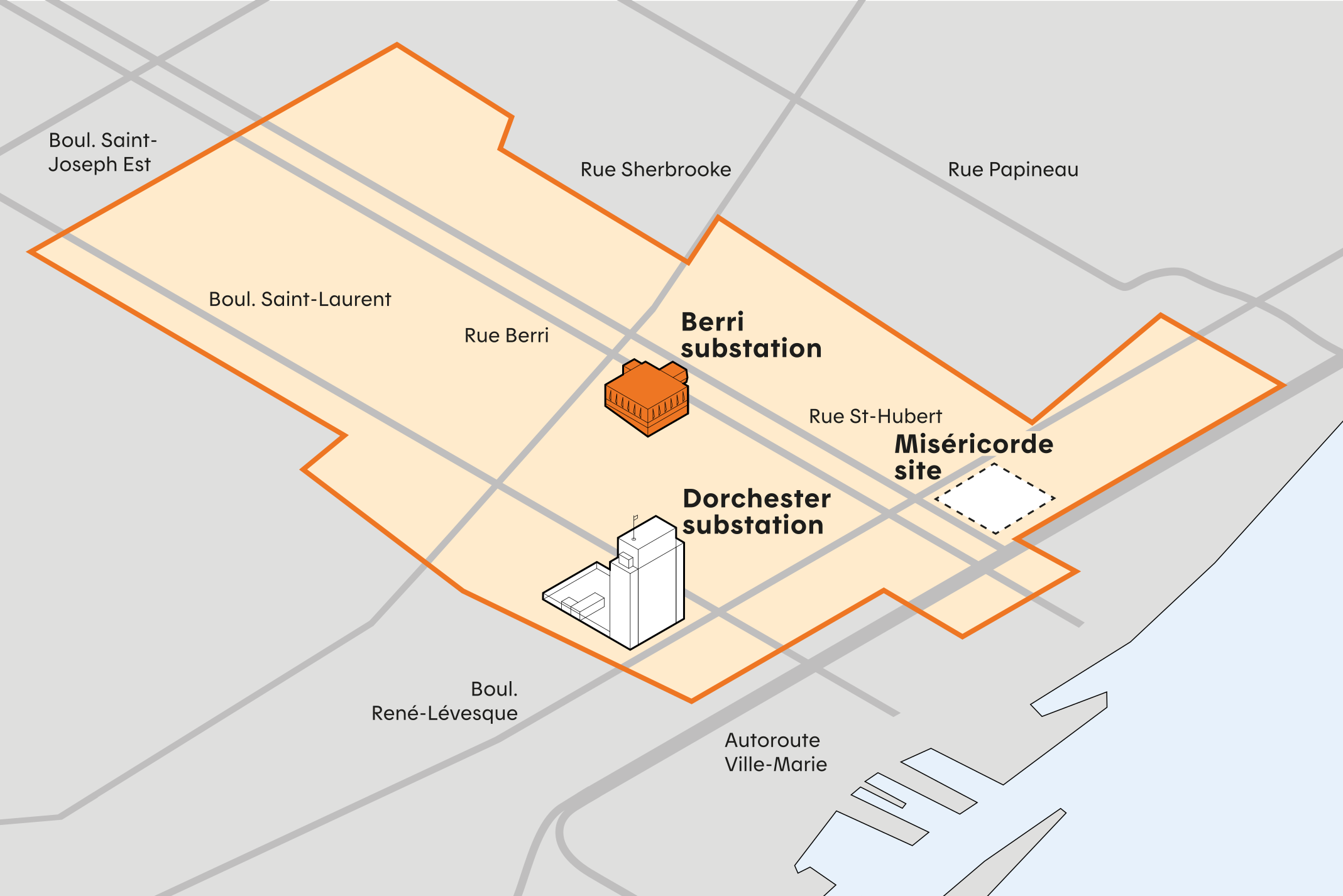
Berri substation power supply
In an initial phase, the pivot substation will temporarily take over supplying electricity normally provided by Berri substation so the facility can be upgraded safely and with no service interruptions for customers.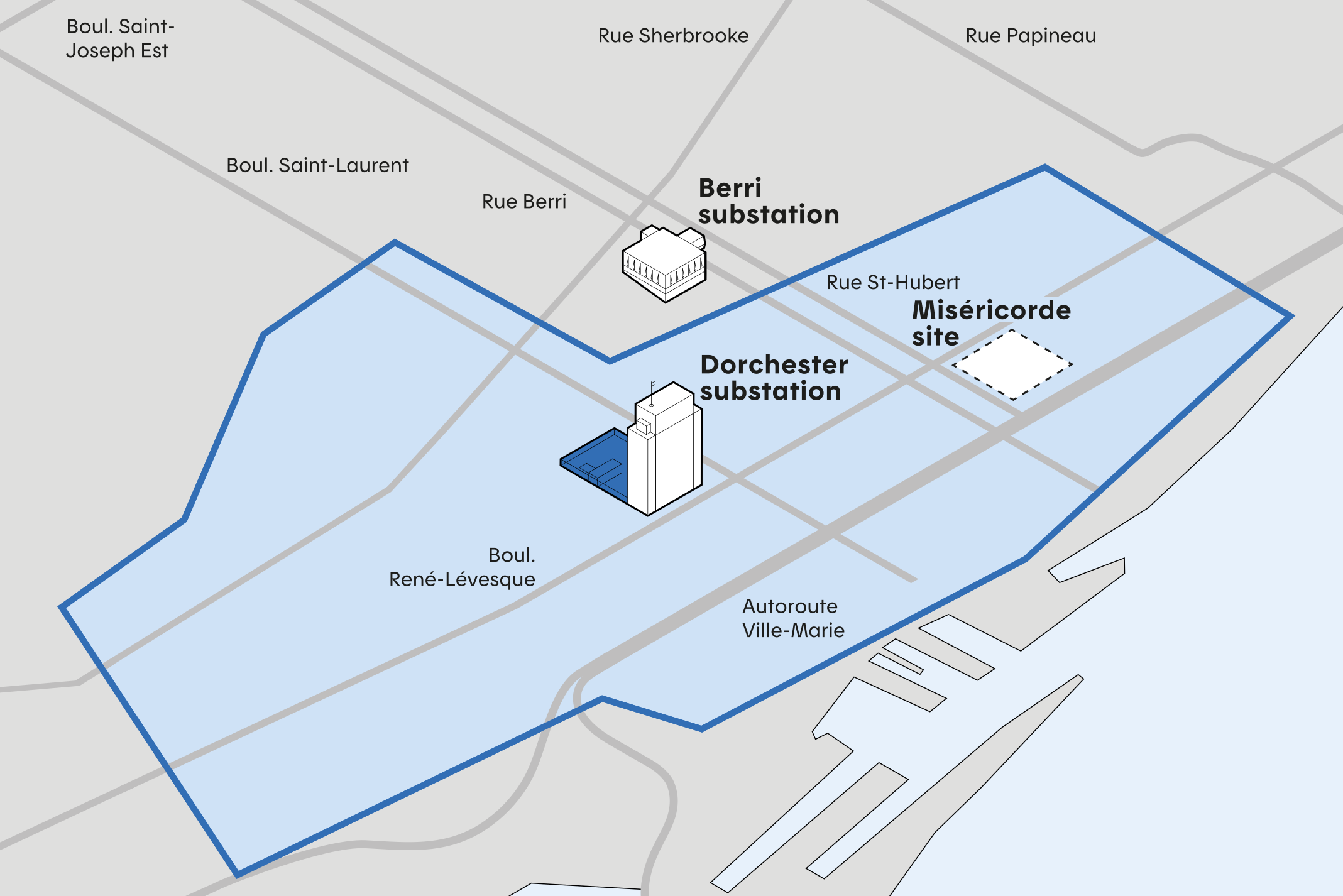
Dorchester substation power supply
Once this work is complete, electricity will be gradually redirected from the pivot substation to the upgraded Berri substation. The pivot substation will then take over for Dorchester substation so it can be modernized or dismantled.Highlights
- A fully indoor 315/25‑kV substation designed to blend discreetly and harmoniously into the historic site and urban fabric.
- A project that meets the energy needs of thriving downtown neighbourhoods and ensures reliable service for residents, businesses and institutions.
- A creative, collaborative initiative that honours heritage, involves the community and features an architectural design that reflects the neighbourhood's character.
Project Details
A project developed with you, for your neighbourhood
More than infrastructure, the planned substation represents a commitment to maintaining quality of life for downtown residents and businesses. Designed to blend seamlessly into its surroundings, the project will:
- Support economic and urban development in the heart of Montréal;
- Preserve the neighbourhood's unique character by limiting visual and noise impacts with a fully indoor design;
- Help build a sustainable future with the community through reliable solutions that are compatible with the surrounding living environment.
We believe this project is an important step in ensuring downtown Montréal remains a welcoming place to live, work and enjoy life.
What we're studying in the draft‑design phase
The various studies undertaken as part of the environmental assessment, addressing both natural and human components, support informed decision-making. Their results are analyzed within an integrated framework that considers regulatory requirements, community issues and concerns, technical constraints, and consultation activities.
This approach seeks to identify potential impacts on the environment and local communities, with the priority of avoiding such impacts or, where avoidance is not feasible, minimizing them. These impacts and the corresponding mitigation measures will be described in detail in the forthcoming environmental assessment.
The analysis covers aspects including:
- Ambient noise
- Archaeology and heritage
- Environment
- Human environment, landscape and visual integration
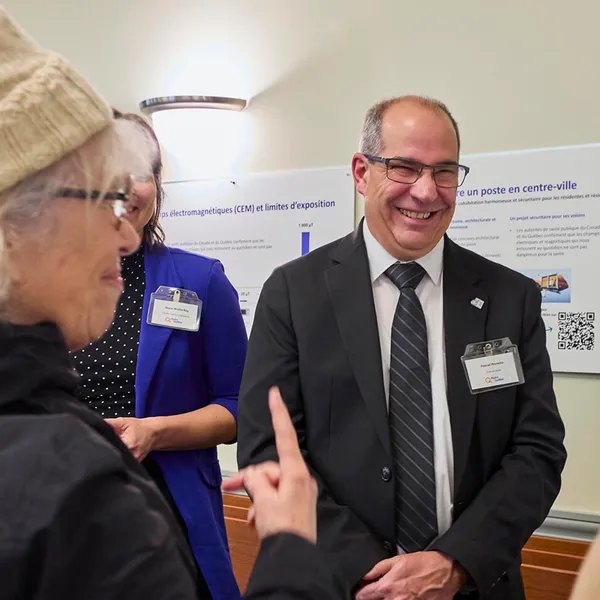
We want to hear what you have to say
We initiated a public consultation process to take your expectations and concerns into account and adapt the project as effectively as possible to local realities.
This process includes:
- Ongoing community relations so the project is carried out in keeping with local needs and considerations
- Targeted meetings with local residents to maintain close ties with the people and organizations directly affected by the substation construction project and leverage their knowledge, expertise and lived experience of the site
- Thematic meetings with the network of experts contributing to the project, providing complementary expertise to Hydro‑Québec to inform the development of the site's master plan
- Public activities to provide broad updates on the project's progress and confirm and enhance the understanding of the challenges and opportunities.
Your opinion matters! Take 5 to 10 minutes to complete this form and share your perceptions, concerns, and expectations regarding the proposed new electrical substation in downtown Montréal, helping to ensure its harmonious integration into the surrounding area.
Preliminary project schedule
This preliminary schedule may be adjusted as the project progresses. Visit our page on key project stages to learn more.
-
2025–2029
Technical studies, environmental assessments and public consultations
Government approvals
-
2029–2033
Construction (including demolition)
-
2034
Commissioning
Documentation
Press releases and information bulletins
- Newsletter May 2026 [in French only]
- Press release September 2025: An innovative solution to support development in downtown Montréal
- Project News – September 2025 [PDF 277 kB]
Meeting and consultation presentations and highlights
- Display panels from the June 16, 2026 public engagement event [PDF 8.68 MB]
- Rapport – Journée contact du 16 juin 2026 [PDF 5.57 MB ‑ in French only]
- Rapport – Rencontre avec les riverains – Mai 2026 [PDF 184 kB ‑ in French only]
- Neighbourhood meeting presentation – May 2026 [PDF 2.72 MB]
- Activity Report – Information sessions – November 4, 5 and 6, 2025 [PDF 407 kB kilobyte]
- Information meeting (presentation) – November 2025 [PDF 656 kB]
- Results of the meetings held in summer and fall 2025 [PDF 48 kB]
Studies conducted as part of the environmental assessment
- Study area map [PDF 2,5 MB ‑ in French only]
- Archaeological potential and supervision study June 2026 ‑ Summary [PDF 73 kB]
Press review
Frequently asked questions
Go to our FAQ for the answers to the most frequently asked questions on the project and our environmental approach.
Yes, absolutely. Many substations are already located near residential neighbourhoods in Montréal and other cities.
Exposure levels to electric and magnetic fields (EMFs) near substations are low and pose no health risk. In most urban substations, the EMFs measured at the fence surrounding the substation do not exceed the ambient levels measured in any home–which result from the presence of the customer’s service entrance and the daily use of common household appliances.
To learn more, visit the web page on Electric and magnetic fields.
Other impacts:
- Lighting: Only the substation’s main entrance and access road will be lit. At night, the lighting will be directed downward and similar in intensity to street lighting.
- Noise: Outdoor noise will be minimal because all the equipment will be inside the substation building. Indoor substations must comply with noise standards of 40 dB at night (7 p.m. to 7 a.m.) and 45 dB during the day (7 a.m. to 7 p.m.). For reference, 40 dB is equivalent to the noise in a home at night, and 45 dB is equivalent to the sound of a working refrigerator. The standards also state that if noise levels in the area are higher than these cutoffs before the substation is built, those noise levels must be respected after construction.
- Worker traffic after commissioning: Substations are automated, so daily traffic is minimal. Hydro‑Québec will access the substation weekly or as needed for maintenance, with two to three workers present at each time.
Very little literature specifically addresses the impact of substations similar to the one proposed on the market value of neighbouring properties. In general, studies on energy infrastructure indicate that some concerns may exist, particularly regarding visual and noise impacts. However, real estate transactions do not consistently reflect these concerns and when an impact is observed, it often tends to diminish over time.
In this case, the substation will be entirely indoors, which will significantly reduce—or even eliminate—the visual and noise impacts typically associated with this type of infrastructure. Furthermore, to ensure the seamless integration of the planned substation on the site of the former Institut des Sœurs de Miséricorde, Hydro‑Québec is planning exceptional measures, including an architectural competition and the preservation and enhancement of heritage buildings.
These features and commitments aim to promote sustainable coexistence with the host community and to minimize the potential impacts of the planned substation on quality of life and the real estate environment.
Berri and Dorchester substations in downtown Montréal are reaching the end of their service life and must be replaced. The technical constraints and the need to remain at the heart of the area to be served limited the options to a 500‑metre radius. None of the scenarios analyzed met all our criteria.
In spring 2025, Hydro‑Québec took a step back to review the options. This reflection led to the bold approach of broadening the study area and reconfiguring part of the underground system to be able to integrate a substation located farther away.
Of the 19 scenarios assessed, only one met the project requirements: the site of the former Institut des Sœurs de Miséricorde. Located midway between Berri and Dorchester substations, it will allow Hydro‑Québec to efficiently supply both neighbourhoods once the system is reconfigured.
Hydro‑Québec is aware of the need for downtown housing and will work with developers and community stakeholders to promote an affordable housing project.
You may also be interested in these pages
Learn more
Discover how we’re shaping our energy future
Get in touch with us
We’re committed to keeping the lines of communication open. Please send us your questions and comments about the project.
Info‑Project line: 1 866 388‑1978

NewsletterA new substation on the site of the former Institut des Sœurs de Miséricorde
This newsletter provides information on the progress of the work and the various stages of the project.