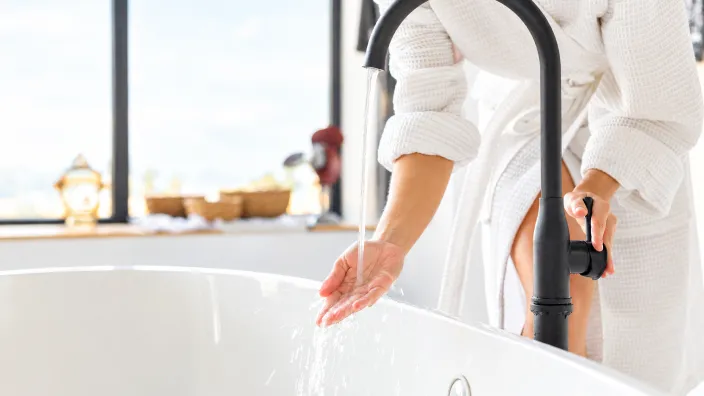
Hot water is used every day for baths and showers, laundry, doing dishes . . . It is such a part of our daily lives that we forget it accounts for up to 20% of our annual electricity bill. After heating, hot water is one of the most energy-intensive uses in the home. Why does it take so much electricity to heat water?
How is electricity used to heat water?
Your water heater acts like a reserve. Every litre of water you use is replaced with a litre of cold water, which the water heater then has to reheat. In other words, the more hot water you use, the harder the water heater needs to work. However, some electricity is consumed more discreetly, even when none of the taps are on. Read on to learn about the three main ways hot water uses electricity.
Daily uses
Showers, baths, laundry and doing dishes account for most of the electricity use required to heat water. The bathroom comes first, accounting for about 65% of a household’s hot water use. Often, this is a good place to find the best ways to save.
What if you started with just one minute?
A shower that lasts less than 10 minutes is usually long enough. Every minute less will help you save about 10% of the electricity needed to heat water. This small change demonstrates why it’s so important to use hot water wisely.

Are you a bath or a shower person?
If you want to save, you’re better off taking a shower. A half‑filled 200‑litre bathtub requires 33% more hot water than a 7‑minute shower.
Background consumption
Even when no one is using any hot water, the water heater turns on to maintain the water temperature and ensure that hot water is always available. Some heat can also be lost in the pipes, particularly if they run through unheated spaces.
Ways not to waste electricity
Certain sources of electricity consumption serve no purpose but nevertheless add to your bill, such as:
- A hot water faucet that leaks, even just a little
- Poorly insulated pipes
- A water heater that isn’t set to the correct temperature
- A high‑flow showerhead or faucet
Did you know?
It’s a good idea to repair a leaky faucet right away. In the space of a month, a leak of one drip per second adds up to enough hot water to fill 4 bathtubs, or the equivalent of 1,600 500‑ml bottles. In other words, your money is going down the drain!
An easy way to save
A simple way to reduce your water use without changing your habits is to install faucet aerators and low‑flow showerheads. By reducing flow, these small accessories can help you save up to 40% of water.
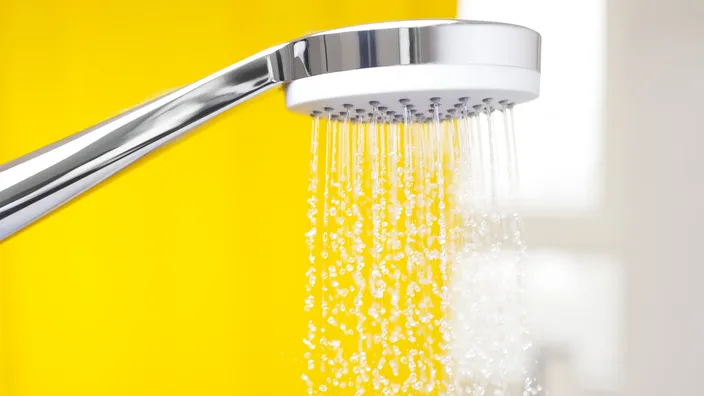
Should you change your showerhead?
There’s an easy test you can do to find out:
- Turn the shower faucet all the way on.
- Collect the water in a large measuring container for 10 seconds.
- See how much water you collect.
- Multiply that by 6.
This will indicate your showerhead flow in litres per minute. Does it exceed 7.6 L/min? A low‑flow showerhead could help you save water while maintaining your comfort.
So how does it work at your house?
Would you like to know what percentage of your electricity consumption goes toward hot water? The Energy Performance Indicator estimates the breakdown of your electricity consumption by use. This will illustrate how much of your overall electricity use goes toward heating water.
With the Energy Performance Indicator, available in your Customer Space, you can also do the following:
- Find out how your electricity consumption compares to that of households that are similar to yours.
- Get personalized recommendations to reduce your electricity bill.
- Track your electricity use and measure your progress over time.
It’s an easy way to understand what has the biggest impact on your electricity bill and also target the savings that will make the most difference.
Easy savings
It’s hard to live without hot water. However, if you have a better idea of how electricity is used to heat water, it’s easier to identify what you can do to save without sacrificing comfort.