
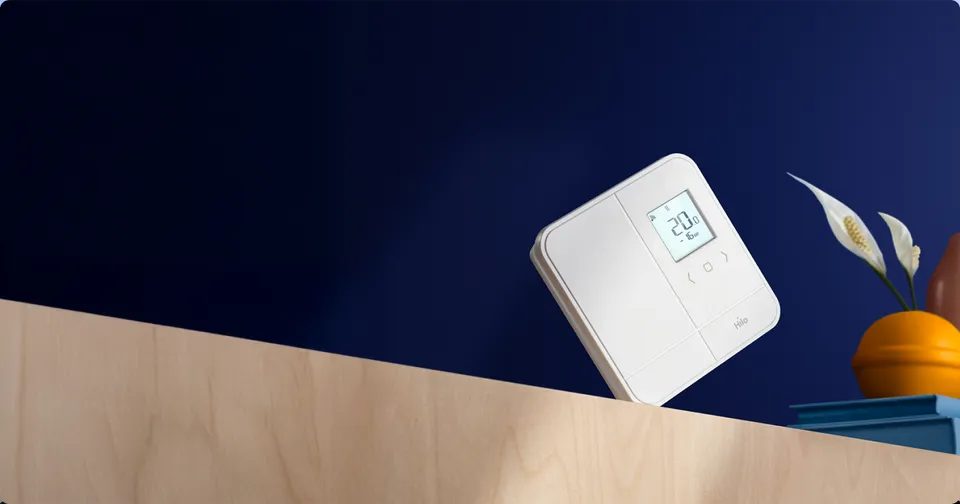
What is a smart thermostat?
A smart thermostat is the modern version of the traditional thermostat. It is used to adjust the temperature in your home, but has three unique features:
- Precision
- Automation
- Connectivity
How do smart thermostats work?
Smart thermostats are equipped with electronic sensors that precisely measure the room temperature.
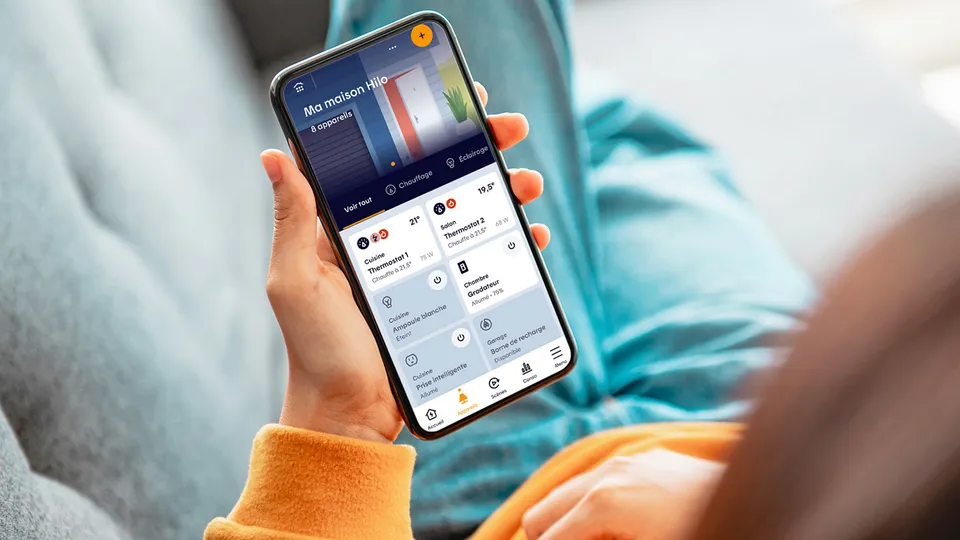
Connected to the Internet, they are associated with a mobile app that allows you to do the following:
- Program routines based on when you are at home or away.
- Adjust the temperature remotely, which may be useful if a family member’s schedule changes.
- Track your electricity use in real time.
Depending on the features offered, smart thermostats can also detect when you are home and learn your household’s habits in order to automatically optimize heating.
Some are also compatible with demand response programs during peak demand events. They automatically adjust the temperature in your home before and during those periods to help reduce electricity use at times of high demand.
Advantages and considerations
Advantages
- Heating can be controlled remotely with a mobile app
- Customized programming based on your lifestyle
- Automated management to optimize savings during peak demand events
- Electricity use tracking in real time
Important considerations
- Hire a master electrician to install your thermostats.
- Check compatibility with the heating system in place.
- When there are several heating sources, choose a thermostat model that is compatible with your devices and the mobile app to simplify your heating management.
Make the right choice and take full advantage of your smart thermostat
To take full advantage of a smart thermostat, it’s important to choose a model that is compatible with your heating system and to adopt a few good habits.
Check compatibility with your heating system.
The choice of smart thermostat depends on the type of heating system in place. In all cases, Hydro‑Québec recommends hiring a master electrician to install your thermostats.
Thermostats for electric baseboard heaters require 120 or 240 volts. They need to be installed in each room or area, and they can be centrally managed with a mobile app.
With a central heating system, a low‑voltage thermostat (24 volts) is generally required.
You’ll be able to set the temperature of all rooms from a single thermostat.
In‑floor heating requires thermostats that are specially designed for that type of system.
Although hot‑water radiators are less common, they can be controlled by certain smart thermostat models. When necessary, consult a specialist for help in choosing a model that is compatible with this type of system.
Optimize comfort and savings
- Program routines based on when you are at home or away.
- Lower the temperature slightly at night or when no one is home.
- Avoid changing the temperature setting frequently: smart thermostats are more effective when the temperature is kept stable.
- If you have a central heating system and auxiliary baseboard heaters, set the temperature of the baseboard heaters about 2 °C lower than the central system to ensure that both heating sources don’t operate at the same time.
- Consult the consumption data in the mobile app for a better understanding of your habits and to adjust your settings.
- If your thermostat is compatible with demand response program during peak demand periods, activate the available automation features to reduce the need for manual adjustments.
Frequently asked questions
Yes, even though smart thermostats are managed via a mobile app, you can always adjust the temperature setting manually.
We recommend hiring a master electrician to install your thermostats. Under Québec’s Building Act, this type of equipment must be installed by a member of the Corporation des maîtres électriciens du Québec (CMEQ).
To be covered by warranty, thermostat installation must comply with Québec’s building code and with the manufacturer’s technical specifications.
You can sell them, donate them or take them to a recycling centre for electronic devices.
The Ça va où ? (Where does it go?) mobile app can help you find a drop‑off site.