
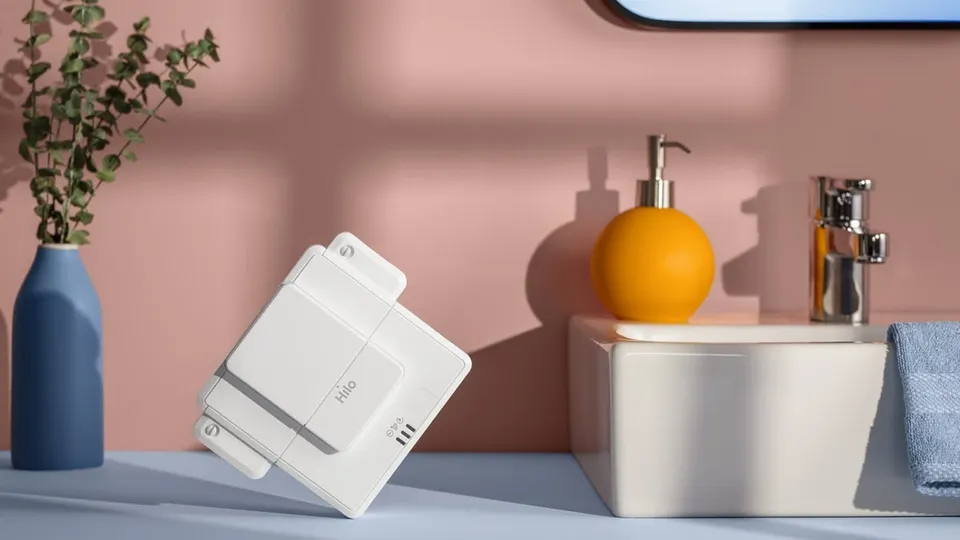
What is a smart water heater controller?
A smart water heater controller is a device that automatically manages the power supply to a water heater.
Combined with Hilo, it cuts off the power supply to the water heater during peak demand events and turns it back on after the event. You don’t have to do a thing. With a mobile app, you can track the energy consumption of your water heater in real time and control it remotely. The device is installed on an existing water heater.
How does a smart water heater controller work?
A smart water heater controller serves as a smart switch on the water heater’s power supply.
During a peak demand event:
- It turns off the power supply to the water heater when the event starts.
- The sensor continuously monitors water temperature and turns the water heater back on if necessary.
- The water heater gradually resumes its normal operation when the peak demand event ends.
During an event, you can use a small amount of the hot water in the tank, for instance, to take a short shower.
Advantages and considerations
Advantages
- Easier to maintain savings during peak demand events
- Automated management
- Remote control
- Compatible with most electric water heaters
Considerations prior to installation
- Ensure the water heater is accessible
- Have the device installed by an electrician in accordance with current standards
- It should be close to the Hilo hub
Simple ways to manage your hot water use safely
To prevent the growth of bacteria like legionella, remember to take the following precautions:
- Set the temperature of the water heater to at least 60°C, in accordance with the recommendation by the INSPQ [In French only]. You can check the temperature in the mobile app.
- Avoid running out of hot water. The lukewarm water from the bottom of the water heater could then end up in the home’s faucets.
- Don’t turn off the water heater during an absence of less than two weeks.
- After a long absence, turn the water heater back on four hours before you return home. When you arrive home, turn on all the hot water faucets to flush the pipes.
Frequently asked questions
You will have hot water during peak demand events, despite the fact that the power supply to the water heater will have been cut off, but your consumption habits will affect the quantity of hot water available.
The hot water stored in the tank remains available, including for taking a shower, provided you use it in moderation.
Water usage that is below the norm for a comparable household.
For example, if you have a 60‑gallon water heater with a temperature setting of 60°C, you have a total of 438 litres (L) of mixed water at 40°C (which represents about 25 to 35 minutes of consumption, at a flow of 10 L/min). If you have a 40‑gallon water heater, the quantity of mixed water at 40°C will be 290 L (which represents about 16 to 25 minutes of consumption, at a flow of 10 L/min).
Therefore, during a peak demand event, you have enough water to take several showers before the safety measure is triggered. The potential number of showers varies in part depending on your water heater’s capacity, its temperature setting as well as shower duration and temperature.
With a 60‑gallon water heater, you could take about six 5‑minute showers, or three 10‑minute showers.* If you have a 40‑gallon water heater, you could take about four 5‑minute showers or two 10‑minute showers.*
Note also that your hot water consumption habits and your water heater’s size affect the quantity of hot water available during peak demand events.
* Assuming a water heater temperature setting of 60°C, a shower hot water temperature of 40°C and a flow of 10 L/min.
If a large quantity of hot water is consumed quickly, the water heater won’t have time to reheat the cold water entering the tank. The lukewarm water from the bottom of the water heater can then end up in the home’s faucets, including in the shower. This increases the risk of contracting legionellosis.
It is important to note that the risk of growth of legionella increases with the age of the water heater.