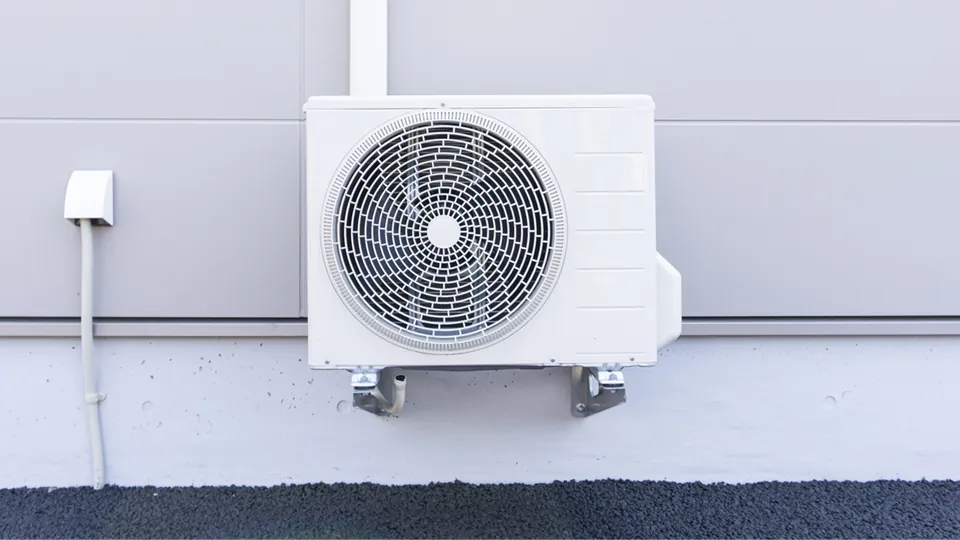
What is a heat pump?
A heat pump is an electrical device that heats and cools your home. It draws thermal energy from the outside air and uses much less electricity than a traditional heating system.

Did you know?
A heat pump can be up to three times more efficient than baseboard heaters when it comes to heating your indoor space.
How does a heat pump work?
A heat pump doesn’t generate heat: it moves it around. With this simple idea, a heat pump heats a home in the winter and cools it in the summer, all while using less electricity than traditional systems.
The system includes two units connected by tubes through which a refrigerant flows:
- An outdoor unit that captures the outdoor air
- A wall‑mounted or central indoor unit that sends the treated air into the rooms of your home

This video explains that a heat pump moves heat instead of generating it. In winter, it draws energy from the outdoor air to heat the home; in summer, it reverses the cycle to release indoor heat outside. This makes it more efficient than many traditional heating systems.
Video of 2 minutes 11 seconds
Heating mode diagram

- The outdoor unit draws in outdoor air.
- The refrigerant absorbs the heat in that air.
- The compressor increases the pressure of the refrigerant, which raises its temperature.
- The heat from the refrigerant is then transferred to the air inside the home. The heated air is released into the rooms of the home.
- The cycle begins again.
A heat pump operates down to a minimum temperature, which varies depending on the model. Below that threshold, a back‑up device—baseboard heaters, electric thermal storage (ETS), etc.—must take over to ensure that the home is adequately heated.
Air‑conditioning mode diagram
In summer, a heat pump extracts heat from the indoor air and transfers it outside.

- The indoor unit draws the hot air from inside the home.
- The refrigerant absorbs the heat in that air.
- The refrigerant flows to the outdoor unit, where the heat is released.
- The indoor air cools down.
- The cycle begins again.
Heat pumps designed for the Québec climate
Depending on the model, heat pumps can operate efficiently down to temperatures between −15°C and −20°C.
ENERGY STAR® certified cold‑climate heat pumps are the best option for Québec winters. They are the most energy‑efficient models and can meet most heating needs down to about −20°C, which is sufficient for most winter days in Québec.
Some high‑end devices can keep operating up to about −25°C, albeit less efficiently.
Advantages and considerations
Advantages
- Up to 40% savings on heating costs in comparison with baseboard heaters
- The same device will heat and cool your home
- Main heating source for most winter days
- Precise temperature control
- Constant temperature
Important considerations
- Opt for an ENERGY STAR® certified cold‑climate heat pump for more energy efficiency in winter.
- Choose an output tailored to your home’s living area and heating profile.
- Hire a qualified professional to install the heat pump in order to ensure safety and energy‑efficiency and to be eligible for the grant.
- Carry out the basic, though essential, maintenance: clean the filters, ensure clearance requirements around the units, arrange for follow‑ups.
Frequently asked questions
In winter, you should opt for the heat pump as your main heating source and minimize your use of baseboard heaters and convection heaters.
Avoid Auto mode. Instead, choose Heating mode in winter and Cooling mode in summer.
Set your heat pump to a comfortable temperature (e.g., 20°C) and set your baseboard heaters 2°C lower (e.g., 18°C) so they only turn on when it’s very cold.
Before activating the air‑conditioning, first try closing the windows and using Fan mode or your ceiling fans.
Clean or check the filters monthly and ensure that a clearance area is maintained around the units at all times.