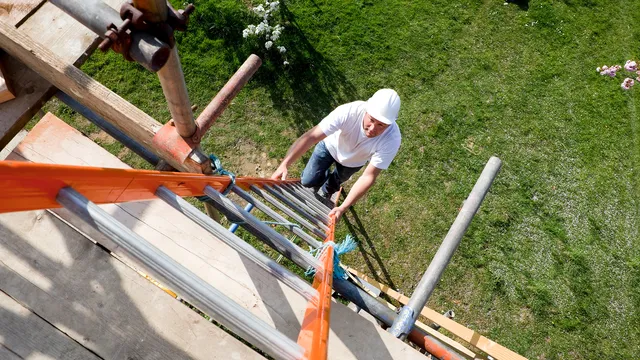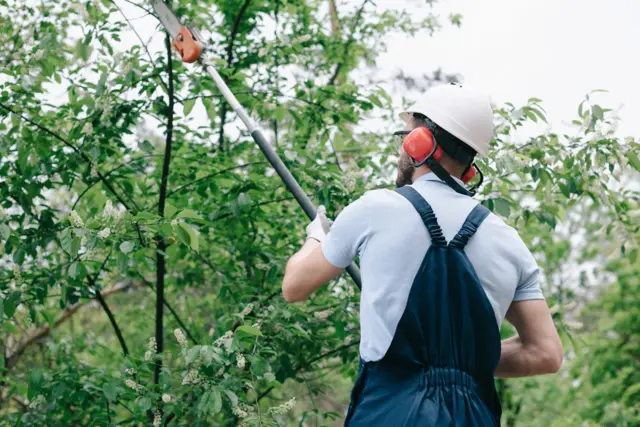



Whether you're a homeowner or contractor, any kind of ground disturbance — digging, trenching, tree planting and so on — calls for careful planning. Unfortunately, the practice is surrounded by dangerous misconceptions. These don't just raise serious risks, including electrocution, infrastructure damage and service interruptions, but the consequences can also prove very costly. Before you break ground, ask yourself if any of the myths below sound familiar.
Myth No. 1 – "Underground utilities are always buried deep."
This belief frequently crops up in relation to landscaping and creates a false sense of security.
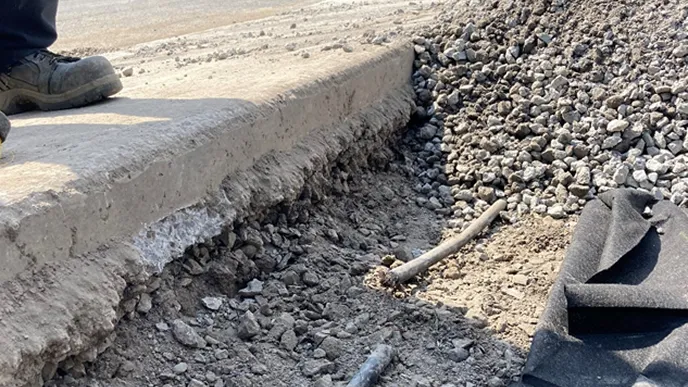
Reality: Many utilities are much closer to the surface than you might think. This is particularly true of telecommunications cables and certain service lines, which can lie just a few centimetres below ground.
The only way to be sure that you won't strike underground infrastructures is to submit a free locate request to Info‑Excavation.
Myth No. 2 – "It's the utility company's responsibility to protect its lines, not mine."
Reality: In Québec, checking before you dig is a legal requirement under section 3.15.1. of the Safety Code for the Construction Industry.
Prevention is therefore a shared responsibility:
- The utility owner must maintain its system or network, keep its mapping up to date, and provide information to the public.
- Any individual or company planning to excavate must submit an accurate and complete locate request.

Did you know?
In 2025, close to 31% of infrastructure damage incidents in Québec occurred when no locate request had been submitted. What's more, 60% of those incidents involved gas or power lines or unauthorized work. And yet they could have been so easily avoided!
Myth No. 3 – "If I don't see anything on the surface, there's nothing underground."
Reality: Plenty of infrastructures are not visible aboveground. However, certain surface elements can indicate their presence, like junction boxes, pad-mounted transformers, utility poles, water service boxes, charging stations or traffic lights.
Trusting only to what you see at the surface increases the risk of incidents.
Myth No. 4 – "Utility lines are always buried at a uniform depth."
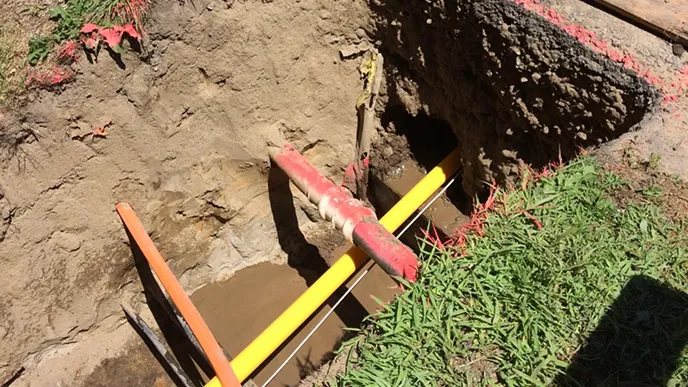
Reality: The depth to which a line is buried can vary from one point to another, depending on:
- Variations in the terrain
- Backfill
- Past work or modifications
Material (earth, sand, gravel or other) used to fill a cavity, level ground or raise a structure.
For these reasons, you should never assume that a utility line will be buried at a consistent depth along its entire length.
Myth No. 5 – "I'm digging with a shovel — it's safe."
Reality: Even when using hand tools, it's still possible to damage service lines, telecommunications cables or shallow pipelines.
Every year in Québec, a great many underground lines are damaged by hand tools.1 Even a simple shovel can lead to service interruptions, costly repairs and, in some cases, electric shock.
That's why staying vigilant is essential, even during small-scale excavations.
The message is clear: Proper preparation — including submitting a locate request — is the best way to prevent damage and dig safely. It's easy, free, and can save you a whole lot of trouble!
Reference
- INFO‑EXCAVATION. 2025 Statistiques d'événements aux infrastructures souterraines, Montréal, 22 p.