
-

Read time: 5 minutes
To ensure grid reliability, Hydro‑Québec regularly inspects its facilities. For many years, inspections relied largely on field observations and targeted interventions. With more than 100,000 km of power lines, many located in hard‑to‑access areas, the scope of the work is considerable. Today, that approach is evolving. Advanced imaging, remote sensing and analysis technologies now give our teams a clearer understanding of the conditions of the grid, allowing them to intervene earlier and more effectively.
A proactive approach to an even more reliable grid
From high‑definition and thermal imaging to 3D light detection and ranging (LiDAR), virtual analysis and artificial intelligence, our teams now have access to a broad range of technologies to collect data on the power grid.
These data are used to:
- Speed up request processing by reducing the number of field visits
- Plan work at the right time
- Anticipate potential failures
- Reduce emergency interventions
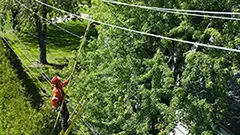
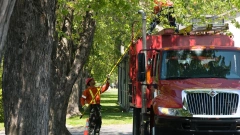
By combining these technologies, our teams can closely monitor vegetation and the condition of facilities. This provides a clear advantage, as vegetation is responsible for more than one‑third of outages, while aging equipment accounts for nearly one‑quarter.
This approach is transforming maintenance practices. The goal is no longer simply to repair issues but to prevent them.


Planned and supervised operations
Data collection may be carried out by Hydro‑Québec teams or specialized partners to support specific activities such as inspections, maintenance, vegetation management and asset inventories.
Each operation is carefully planned and assessed to evaluate risks, determine the most appropriate methods and ensure compliance with the Canadian Aviation Regulations (CARs) and privacy protection requirements.
Drones and the grid: A serious risk!
Flying a drone near power lines is regulated because it involves significant risk and requires specialized expertise. This activity is reserved for trained specialists. Never operate a drone near electrical facilities.
Your privacy is protected
Data collection activities are primarily carried out from public roads or in the vicinity of facilities. Some elements, such as individuals or licence plates, may occasionally be captured unintentionally. The information gathered is used solely for infrastructure management and maintenance.
Several measures are in place to ensure information is handled securely and privacy is protected.
As a public body, Hydro‑Québec is subject to the Act respecting Access to documents held by public bodies and the Protection of personal information. Accordingly, it ensures the protection of the personal information it collects in the course of its activities.
To learn more about Hydro‑Québec’s privacy practices, consult our privacy policy.
Technology supporting human expertise
As advanced as these technologies may be, they do not replace the expertise of our field teams. Rather, they enhance it. The data collected support decision‑making, but interventions are always guided by the judgment, skill and know‑how of the teams on the ground.
By streamlining analysis and reducing certain repetitive or high‑risk tasks, these tools enable teams to focus on what matters most: the quality of interventions and reliability of the grid.

Did you know?
Laid end to end, Hydro‑Québec's distribution system would circle the Earth three times! Inspecting this vast number of kilometers by humans alone is impossible. Luckily, we can use innovative technologies to help us!
Better equipped for the challenges ahead
The use of these technologies is part of a broader evolution in grid maintenance practices. As they continue to develop, they pave the way for even more precise interventions and a deeper understanding of the grid and its environment across the territory–essential advantages in addressing the challenges ahead, including those related to climate change.
Line inspections from above

Follow inspection teams aboard a helicopter equipped with thermal imaging cameras. By identifying hot spots, which are early warning signs of potential failures, they help prevent outages.
2-minute video